

How a Lawyer Can Help With Post Foreclosure Evictions in Washington
Last Updated:
5 Minutes
By:
ROI Law Firm
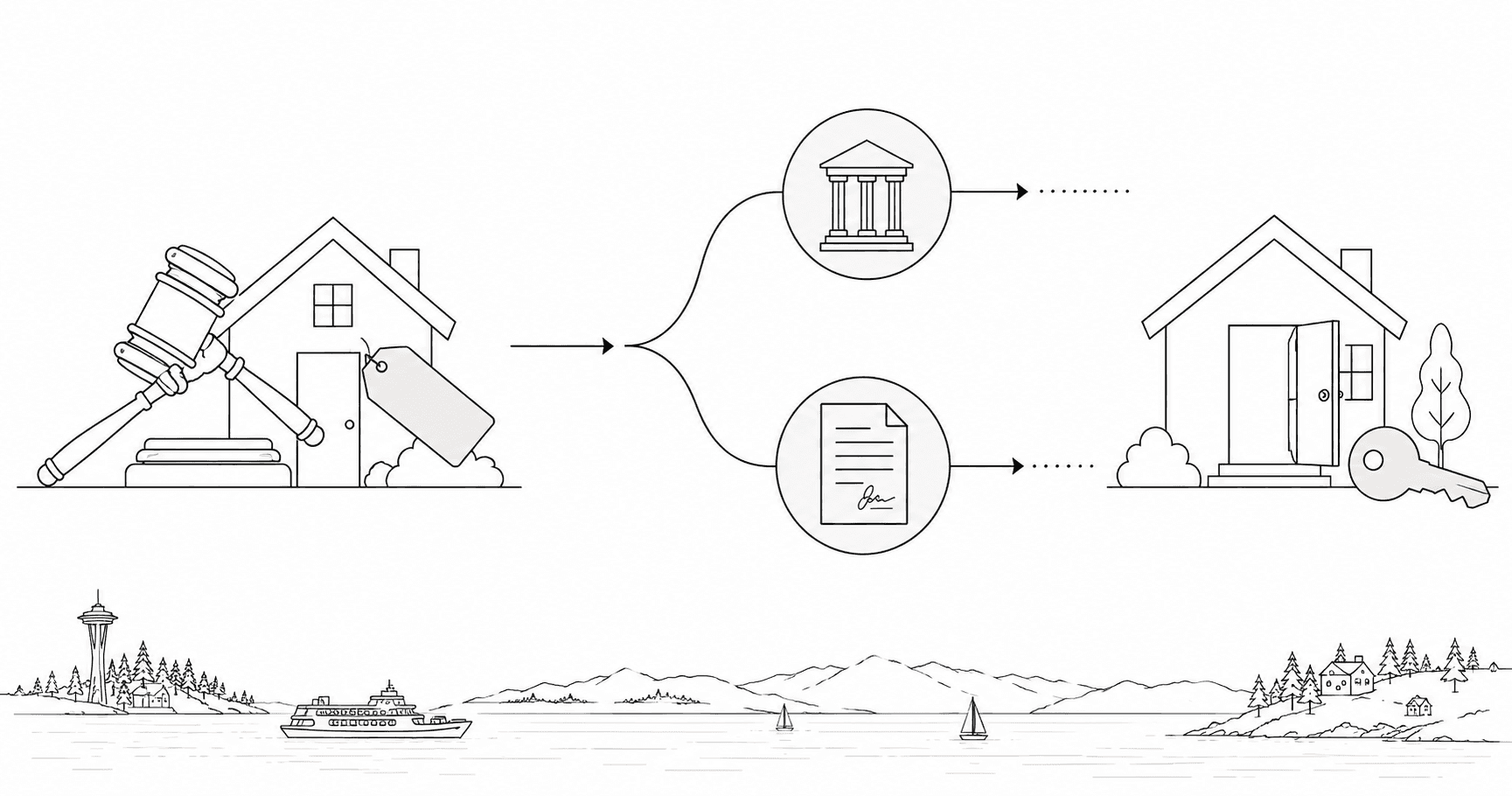
If you just bought at a trustee's sale or took back an REO property, here is how a lawyer can help with post foreclosure evictions: by putting each occupant on the correct legal track the first week, instead of discovering the wrong track at a hearing in month three. Washington's Deeds of Trust Act, RCW 61.24, gives the purchaser a right to possession on the 20th day after the sale. Turning that right into keys is where the cases go sideways.
This article is a senior practitioner's look at where do-it-yourself post-sale removals stall, what counsel actually adds, and what the delay costs while the asset sits occupied. It feeds our post-foreclosure and REO practice hub.
Why post-sale cases differ from ordinary evictions
A post-foreclosure removal looks like an eviction but runs on different law. The occupant is usually not your tenant. There is no lease, no rent ledger, and no landlord-tenant relationship, so the Residential Landlord-Tenant Act playbook of pay-or-vacate notices does not fit the former owner. Instead, RCW 61.24.060 entitles the purchaser to possession as against the borrower and those holding under them, enforced through a summary proceeding in superior court under the unlawful detainer statute, RCW 59.12.
Occupant identity changes everything. A holdover former owner is one track. A bona fide tenant who was renting from the foreclosed owner is another: federal law generally gives that tenant 90 days' notice, and often the right to finish an existing lease term. Unknown occupants, relatives, or a former owner claiming the sale itself was defective can push the case out of unlawful detainer entirely and into an ejectment action under chapter 7.28 RCW, a full civil lawsuit with a longer clock.
Myth: "REO removal is routine paperwork." Asset managers and first-time auction buyers repeat this one to each other. It is true only when the occupant leaves voluntarily. The moment anyone stays, you are litigating possession in superior court against a party who may raise sale defects, tenancy claims, or service challenges, and the paperwork is the case. Treating it as a form-filling exercise is how a 20 day possession right becomes a six month standoff.
Where DIY removals stall
The failure patterns are consistent. The buyer serves an RLTA notice on a former owner it does not apply to, and the case gets dismissed at the show cause hearing. The buyer misses that the occupant is a bona fide tenant entitled to 90 days, and the notice is void. Service is attempted casually, without the proof a judge needs. The occupant alleges defects in the trustee's sale, and the buyer, now pro se in superior court, is answering wrongful foreclosure arguments. Or the buyer simply waits, hoping the occupant drifts away, while taxes and insurance keep running.
Each of those mistakes resets some or all of the clock we mapped stage by stage in our eviction timeline guide [link to: pillar post], and the occupant-by-occupant rules are covered in our guide to removing occupants who are not tenants [link to: removing occupants post].
What counsel actually does
The first week, we classify every occupant: former owner, bona fide tenant, subtenant, or unknown. That classification dictates the notice, the statute, and the courtroom. We serve the correct notice with documented service, file the unlawful detainer or ejectment in the right county's superior court, handle the show cause hearing and any sale-challenge defenses, and take the writ of restitution through the sheriff's civil unit. Where it makes economic sense, we run a cash-for-keys negotiation in parallel, because a signed move-out agreement in three weeks often beats a contested hearing in eight.
The value is not that a lawyer files faster forms. It is that the case never has to be restarted.
The cost versus time comparison
Run the numbers on a stalled case. A $450,000 REO house in Parkland carries roughly $2,800 a month in taxes, insurance, utilities, securing costs, and cost of capital while occupied. A DIY removal that stalls on a bad notice and a re-filed case can sit four extra months: about $11,200 in carrying costs, before the refiling fees and before the market moves. Competent counsel on a clean former-owner case typically has possession in six to ten weeks. The legal fee is real, but it is a fraction of what the occupied months cost, and unlike carrying costs, it ends.
How this plays out across Western Washington
Pierce County (Tacoma, Parkland, Lakewood, Puyallup): Our home court and the region's most active trustee-sale market. Pierce County Superior Court's show cause calendar moves well when the paperwork is right the first time.
Kitsap County (Bremerton, Port Orchard, Silverdale): A steady flow of post-sale cases and a compact docket. Sheriff scheduling for writs is the variable to plan around, especially in summer.
Eastside King County (Bellevue, Kirkland, Issaquah, Renton): Fewer sales, far higher stakes. On a Bellevue asset, every occupied month can exceed $5,000 in carrying costs, which changes the cash-for-keys math.
Snohomish County (Everett, Marysville, Lake Stevens): Timelines run close to Pierce. Auction buyers active in multiple counties should expect county-by-county differences in hearing calendars, not in the underlying statutes.
Your next step: a two-minute self-audit
If you hold a post-sale property with someone still inside, check four things: you know exactly who is living there and under what claim, the 20 day possession date under RCW 61.24.060 has been calendared, any notice already served matches the occupant's actual status, and you have proof of service you could hand a judge. If any answer is fuzzy, that is the gap the occupant's attorney will live in. Send us the trustee's deed, any notices served, and what you know about the occupants, and we will map the fastest lawful route to possession. Book a consultation before the carrying costs choose your strategy for you.
Disclaimer: This article is for informational purposes only and does not constitute legal advice or create an attorney-client relationship. For guidance on a specific dwelling unit or tenancy in Washington State, consult a licensed Washington attorney.
Have a question about your property?
Whether it's a notice, a lease, an eviction, or a deal under review, tell us what's going on and a Washington landlord-tenant attorney at ROI Law Firm will get back to you.
Book a consultation →
Tacoma, WA
(253) 753-1530
1302 North I Street, Suite C, Tacoma, WA 98403
© 2025 ROI LAW FIRM. All rights reserved.