

Self Help Eviction in Washington: Why Lockouts and Shut-Offs Are Illegal
Last Updated:
4 Minutes
By:
ROI Law Firm
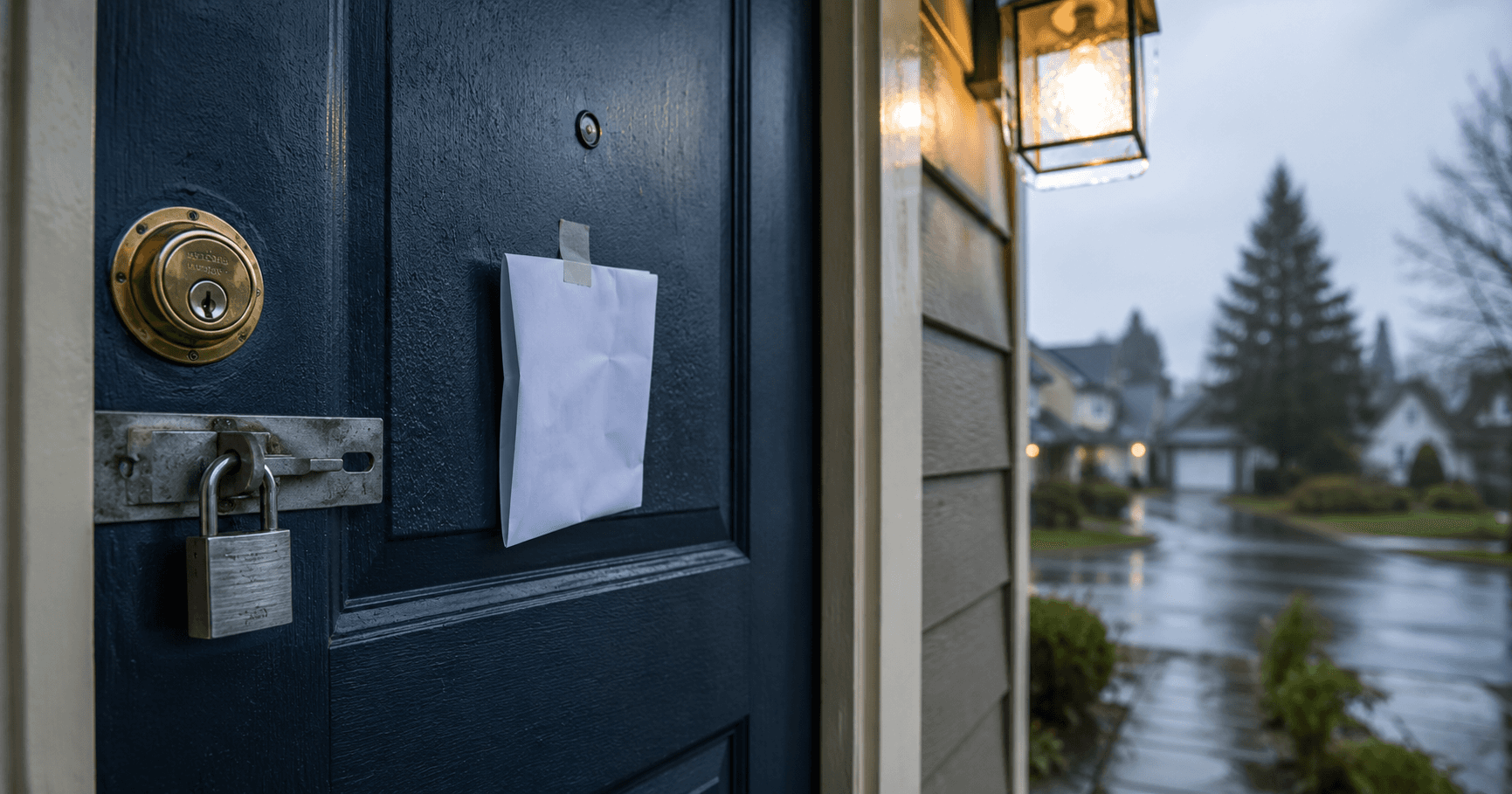
A self help eviction in Washington is any attempt to force a tenant out without a court order: changing the locks, hauling belongings to the curb, or shutting off the power until they leave. Washington law flatly prohibits it, chiefly through RCW 59.18.290. The hard truth for landlords is this: self-help turns a case you were going to win into a case you pay to settle. Here is how the law works, what it costs, and the lawful route instead.
What counts as self-help
The category is wider than most landlords think. It includes changing or adding locks while the tenant still has a right to possession, removing doors or windows, taking the tenant's property out of the unit, shutting off water, heat or electricity to force a move-out under RCW 59.18.300, and blocking access to the unit or parking. It also covers pressure tactics that add up to the same thing, such as repeated unannounced entries. In a residential tenancy, only the county sheriff can remove a tenant, and only while executing a writ of restitution issued by the superior court under RCW 59.18.390.
Myth busted: "It is my property, I can act." Ownership is not the same as possession. When you rent the unit out, the lease transfers the right of possession to the tenant until a court says otherwise. Until the sheriff executes the writ, entering and retaking the unit is not an owner exercising rights. It is a lockout, and the statute treats it that way regardless of how much rent is owed.
The statutory penalties
RCW 59.18.290 lets a locked-out tenant go to court, get back into the unit, and recover damages, costs and reasonable attorneys fees from the landlord. RCW 59.18.300 adds a separate penalty for utility shut-offs: actual damages plus a statutory amount for each day the service stayed off, on top of the fee award.
Run the numbers on a typical case. Your tenant owes $2,000. You cut the power and change the locks, and the tenant is out for ten days before a commissioner orders them back in. The exposure stacks up like this: the daily statutory penalty for the shut-off, hotel and food costs, spoiled groceries and any damaged belongings, then the tenant's attorneys fees, which routinely reach $5,000 to $8,000 by the time the motion is heard, and your own lawyer's fees on top. You are past $10,000 before the original $2,000 in rent is even discussed, and the tenant is back in the unit.
Why courts side with tenants
Landlords are often surprised at how little sympathy a lockout gets in court, even with a clean ledger showing months of unpaid rent. There are two reasons. First, the statute is written to protect possession, not to weigh who behaved better, so "the rent was unpaid" is not a defence to a lockout claim. Second, commissioners see self-help as a landlord bypassing the very court they are standing in. That costs you credibility in the unlawful detainer you still need to run, and it hands the tenant's lawyer a counterclaim with automatic fee-shifting attached.
The lawful alternative
The lawful path is the unlawful detainer process: serve the correct written notice under RCW 59.12.030, file in superior court, attend the show cause hearing, take judgment and a writ of restitution, and let the sheriff restore possession. A straightforward nonpayment case typically runs six to ten weeks. That is slower than a Saturday lock change, but it ends with possession, an enforceable judgment, and no counterclaim. We walk through every stage in our guide on how to evict a tenant in Washington state, and our landlord and rental property practice handles the process end to end.
The rules above are statewide. From our Tacoma office, ROI Law, PLLC acts for landlords across Pierce County, including Lakewood, Puyallup and University Place, and in Kitsap County from Bremerton to Port Orchard. On the Eastside of King County we represent owners in Bellevue, Issaquah, Sammamish, Kirkland, Newcastle, Renton, Maple Valley, Snoqualmie, Woodinville and Bothell, and in Snohomish County we cover Marysville, Mill Creek, Lake Stevens and Everett.
Check yourself before you act
If you are angry enough to be pricing new locks, that is the moment to stop and get the file reviewed. Send us the lease, the ledger and any notice you have served or drafted, and ROI Law, PLLC will tell you plainly whether your case is ready to file and what it will take to get possession lawfully. The review is faster and far cheaper than defending a lockout claim. Book a consultation before you touch the locks.
Disclaimer: This article is for informational purposes only and does not constitute legal advice or create an attorney-client relationship. For guidance on a specific dwelling unit or tenancy in Washington State, consult a licensed Washington attorney.
Have a question about your property?
Whether it's a notice, a lease, an eviction, or a deal under review, tell us what's going on and a Washington landlord-tenant attorney at ROI Law Firm will get back to you.
Book a consultation →
Tacoma, WA
(253) 753-1530
1302 North I Street, Suite C, Tacoma, WA 98403
© 2025 ROI LAW FIRM. All rights reserved.