

Easement Basics in Washington: What an Easement Enforcement Attorney Sees in Access Disputes
Last Updated:
5 Minutes
By:
ROI Law Firm
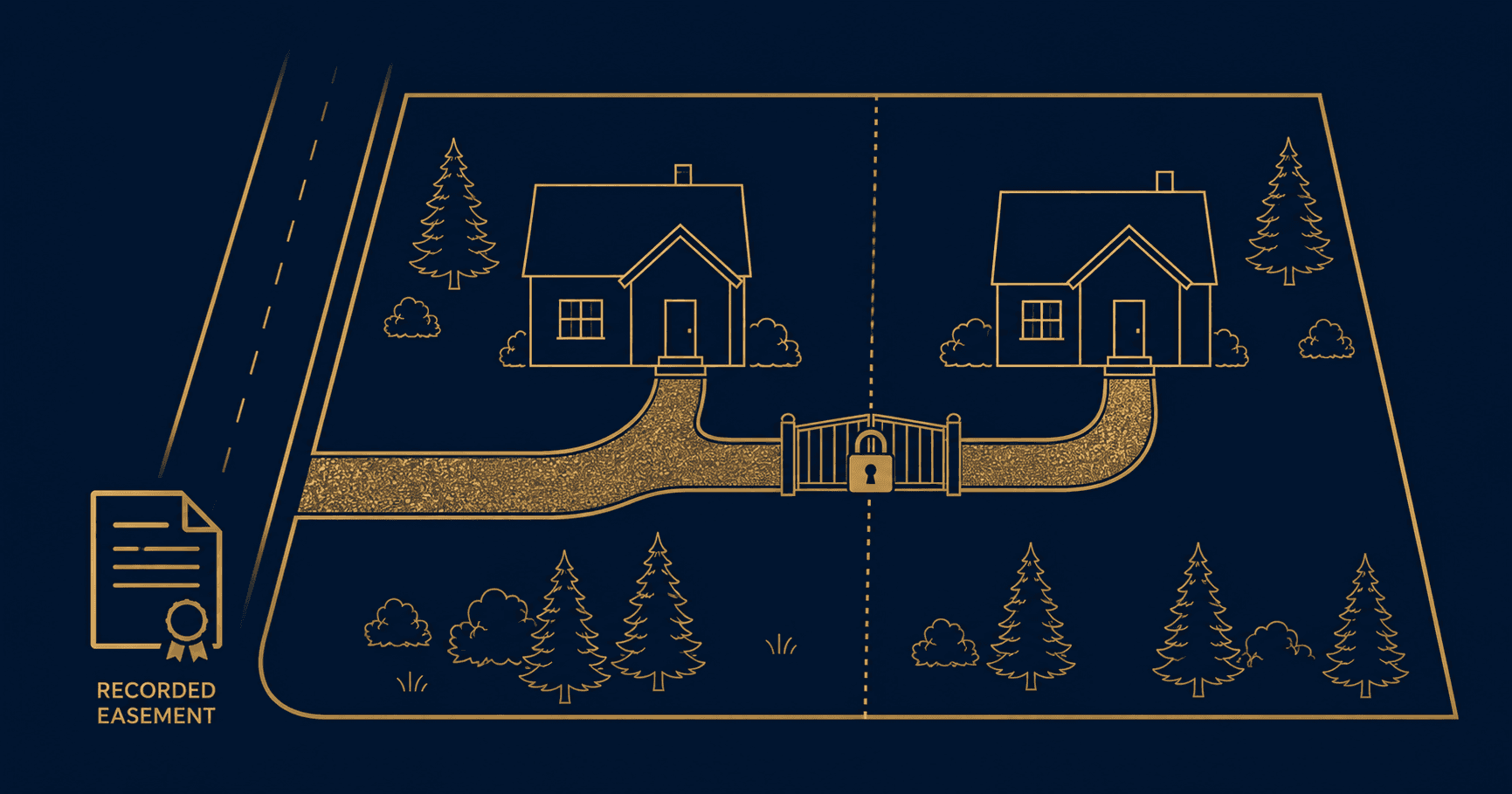
By the time an easement enforcement attorney gets the call, there is usually a gate across a driveway that was open for twenty years. Washington is full of parcels that depend on someone else's land for access: the flag lot behind a neighbor, the cabin at the end of a private gravel road, the two houses sharing one driveway. When those arrangements are documented and recorded, they survive sales, feuds, and estates. When they are not, they become litigation. This is the plain map of how easements work here and how access disputes actually get resolved. It anchors our easements practice hub.
Easement types, in plain English
An easement is a right to use land you do not own, usually for access or utilities. Washington recognizes several ways one is created. An express easement is granted or reserved in a signed, recorded instrument, and because an easement is an interest in land, Washington's conveyancing statutes, RCW 64.04.010 and .020, require a deed to create one. An implied easement can arise when one parcel is split from another and the prior use (a driveway, a waterline) was apparent and necessary. An easement by necessity serves a landlocked parcel, and where negotiation fails, Washington even allows a private condemnation action for a way of necessity under chapter 8.24 RCW. Finally, a prescriptive easement is earned by long use without permission. The first kind is a document. The other three are lawsuits waiting to be avoided.
How prescriptive rights arise
A prescriptive easement requires use of a defined route that is open, notorious, continuous, and adverse for ten years, the same period that governs adverse possession claims under RCW 4.16.020. Every element gets fought. "Adverse" is the big one: Washington courts presume that use of a neighbor's land in undeveloped areas, or between neighbors acting neighborly, is permissive, and permissive use never ripens into a right, no matter how many decades it runs. That presumption surprises people on both sides of the fence line. The neighbor who politely allowed the shortcut has not lost anything; the user who relied on politeness has not gained anything. Ten years of gravel deliveries prove nothing by themselves. What matters is whether the use was under a claim of right, and whether the owner ever gave, or was asked for, permission.
Shared driveways and private road agreements
Two houses on one driveway, or ten cabins on one private road, is a cost-sharing problem pretending to be an access problem. The easement gets everyone the right to drive through; it rarely says who grades the gravel, plows the snow, or pays when the culvert fails. A written shared driveway or private road maintenance agreement fixes that: it allocates costs by formula, sets decision rules, and binds successors when recorded. Lenders increasingly require one before financing a home on a private road, which means the missing agreement surfaces at the worst time, mid-escrow on somebody's sale. Drafting one while the neighbors still wave at each other costs a fraction of negotiating one through attorneys after the first plow bill fight.
Myth: "A verbal access deal holds up." It does not, and this myth produces more easement litigation than any other single cause. An oral promise to allow access is, at best, a license: revocable at any time, and generally extinguished when the property sells. It is not an easement, because interests in land require a signed deed under the statute of frauds. Washington's recording act, RCW 65.08.070, adds the second blade: even a written but unrecorded easement can be void against a later buyer who purchases without notice of it. A handshake plus twenty years of goodwill can equal zero on the day the servient parcel changes hands.
Enforcing access when it is blocked
When a gate goes up or a route gets plowed under, the tools are civil. A quiet title action under chapter 7.28 RCW establishes that the easement exists and defines its scope. An injunction orders the obstruction removed and the interference stopped. Damages cover losses in the meantime. What the law does not favor is self-help: cutting locks, bulldozing the gate, or blockading the neighbor in return escalates a property case into something worse. The winning posture in an access dispute is almost always the party with the recorded document, the survey, and the clean hands.
Here is the dollar math. A Gig Harbor owner buys a home served by a neighbor's gravel drive, relying on the seller's assurance that "there's always been access." Nothing is recorded. Eight years in, the neighbor sells to a buyer who fences the line. The prescriptive claim fails (eight years, and the use began permissively), so the owner sues for an implied easement and settles mid-litigation for a purchased easement: roughly $55,000 in fees and payment, fourteen months of uncertainty, and a clouded listing if they had tried to sell meanwhile. The recorded easement deed that would have prevented all of it costs a few thousand dollars at purchase. That ratio, twenty to one, is the entire argument for doing this on paper.
Recording: the cheap step that does all the work
Every durable easement ends the same way: a signed instrument, a legal description that matches a survey, and recording with the county auditor. Recording gives the world notice, binds future owners of both parcels, and takes the recording act off the table as a defense. This is transactional prevention in the same sense as the rest of our documents practice, and it intersects with the development questions in our land use guide whenever the access route also has to satisfy permitting standards.
How this plays out across Western Washington
Pierce County (Tacoma, Gig Harbor, Puyallup, Graham): Our home court. The Key Peninsula and Graham are dense with private roads and legacy handshake access, and quiet title filings here reflect it.
Kitsap County (Bremerton, Port Orchard, Poulsbo, Kingston): Possibly the region's highest concentration of shared gravel roads and waterfront flag lots. Ferry-area parcels trade fast, and each sale is a chance for an unrecorded arrangement to die.
Eastside King County (Bellevue, Issaquah, Sammamish, Snoqualmie): Plateau and foothill acreage carry long private drives, and at Eastside land values, a blocked access route can strand seven figures of equity behind one gate.
Snohomish County (Lake Stevens, Marysville, Everett): Rural east-county parcels mirror the Pierce and Kitsap pattern: old routes, thin paper, new owners with new fences.
Your next step: a two-minute self-audit
Pull your title report and answer four questions: does every access route you depend on appear as a recorded easement, does the legal description match where the driveway actually sits on the ground, is there a written, recorded maintenance agreement for any shared drive or private road, and does anyone use your land for access without a document that says so? A no on any of the four is a dispute in incubation. Send us the title report, the survey, or the letter your neighbor just sent, and we will tell you what your access actually rests on. Book a consultation before the gate goes up.
Disclaimer: This article is for informational purposes only and does not constitute legal advice or create an attorney-client relationship. For guidance on a specific dwelling unit or tenancy in Washington State, consult a licensed Washington attorney.
Have a question about your property?
Whether it's a notice, a lease, an eviction, or a deal under review, tell us what's going on and a Washington landlord-tenant attorney at ROI Law Firm will get back to you.
Book a consultation →
Tacoma, WA
(253) 753-1530
1302 North I Street, Suite C, Tacoma, WA 98403
© 2025 ROI LAW FIRM. All rights reserved.