
The Two HB 1217 Myths Still Costing Washington Landlords in 2026
Last Updated:
6 min read
By:
ROI Law Firm
On May 7, 2025, Washington State enacted House Bill 1217 (HB 1217), the first comprehensive statewide rent stabilization law in the state's history. A year in, the dust has settled enough to see what is working, what is tripping landlords up, and where the statute is still being tested.
This article is a senior practitioner's one-year update: what the statute actually requires, the 2026 numbers, the notice requirements, and the local overlays that matter across King, Snohomish, and Kitsap counties. Whether you own a fourplex in Bellevue, a duplex in Edmonds, or a single rental in Bremerton, the statewide rules below apply identically. The local overlays do not.
01: The statute - What HB 1217 actually says
HB 1217 amended Washington's Residential Landlord-Tenant Act to set out the notice of rent and fee increases, limits on how much rent can rise, and tenant remedies when those rules are broken. Four core provisions matter most:
First-year rent freeze. A landlord may not raise the rent on any dwelling unit during the first 12 months of a tenancy, whether month-to-month or fixed-term.
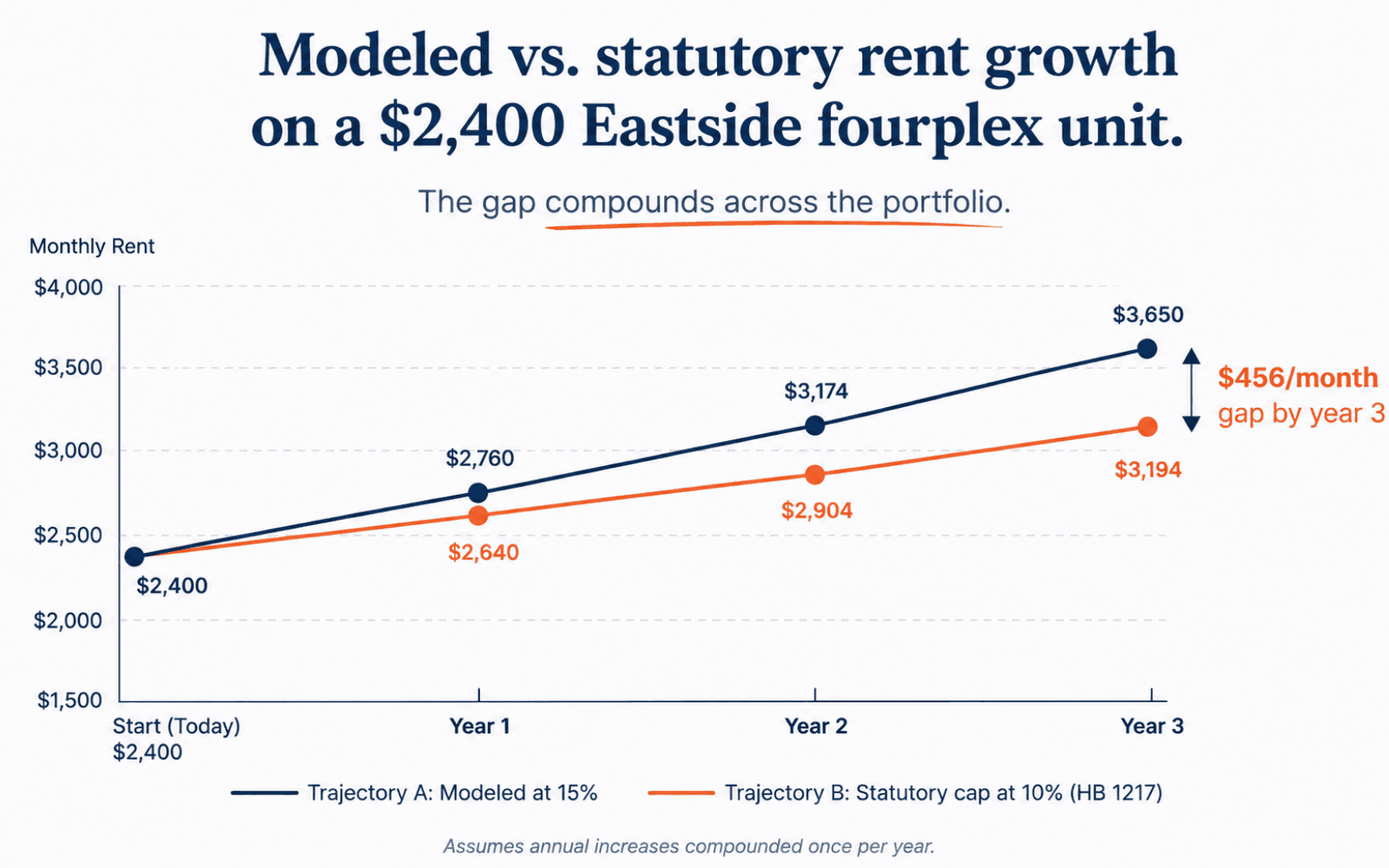
Annual rent cap. After the first year, rent cannot rise by more than the lesser of 7% plus the Consumer Price Index or 10% in any 12-month period. Mobile and manufactured home lots are subject to a 5% cap.
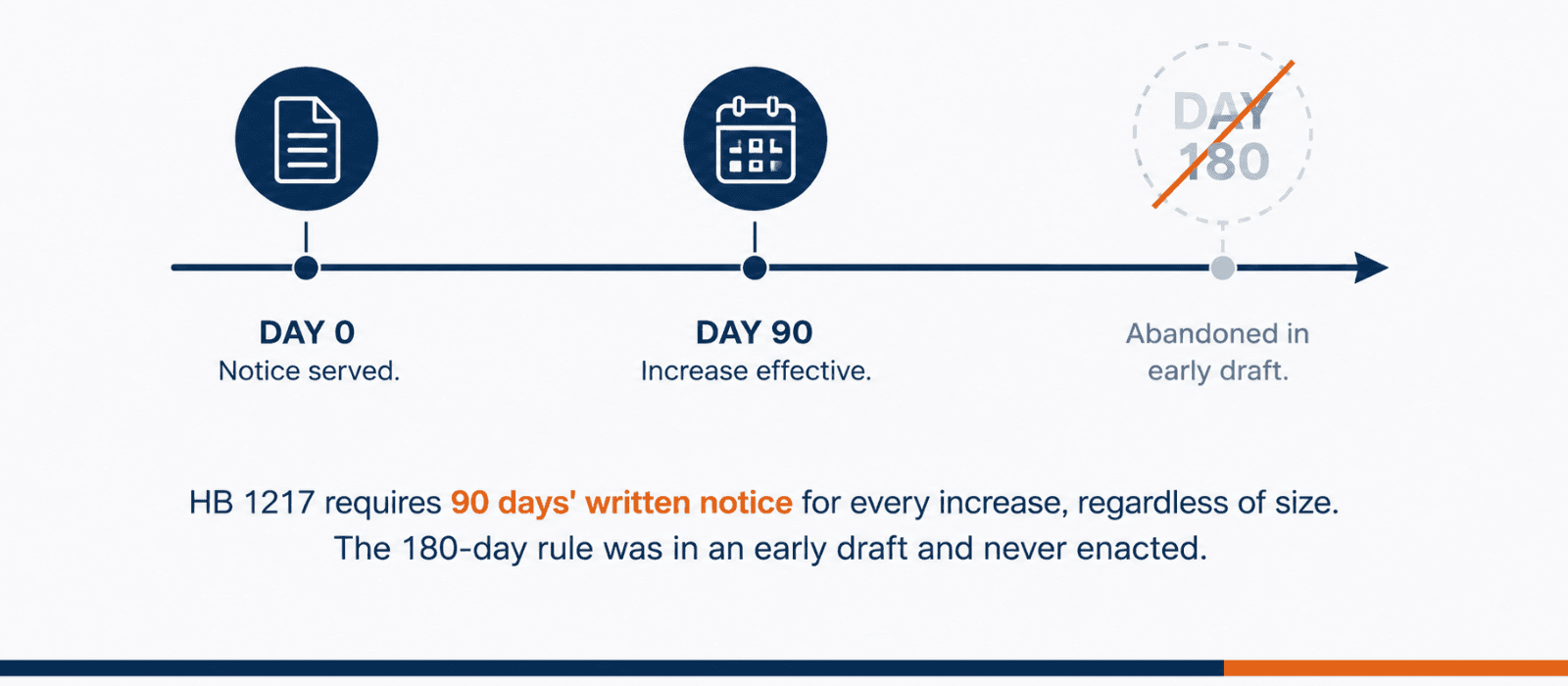
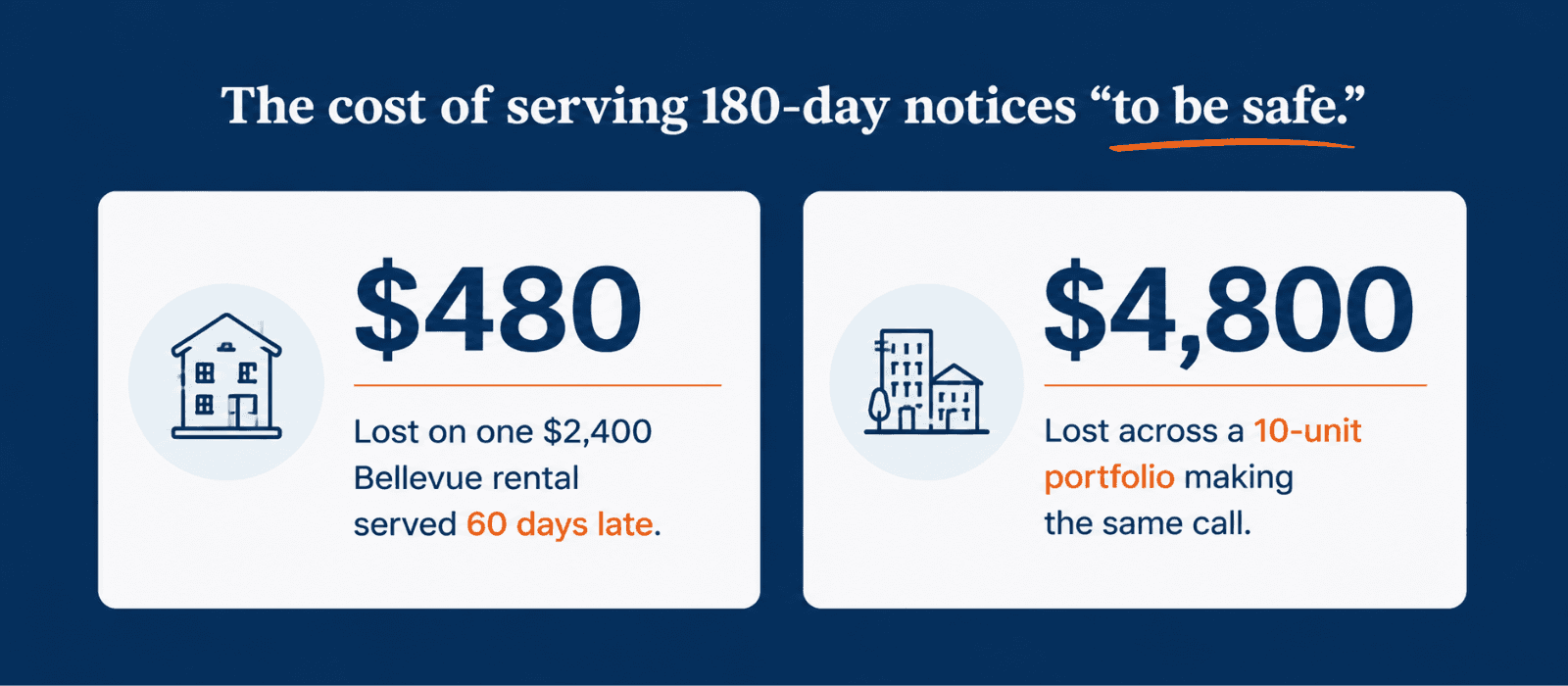
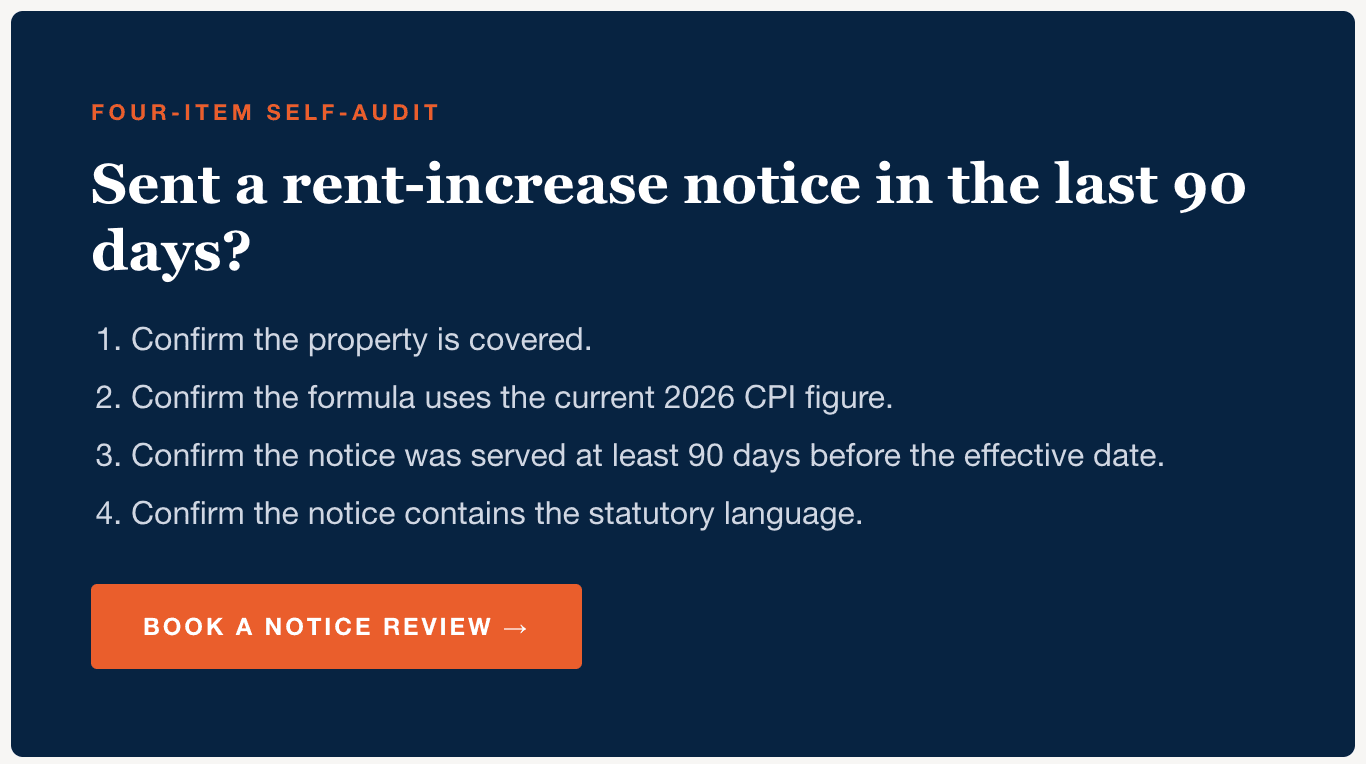
90 days' written notice. All increases requiring a change to what the tenant pays now require 90 days' written notice, up from 60. The statute prescribes the exact language landlords must use.
Lease-type parity. A landlord may not charge more than a 5% rent differential between month-to-month and fixed-term offers for the same unit.
02: The numbers - The 2026 rent-cap math
The annual cap formula is mechanical: 7% plus the June 12-month percent change in the Seattle-area Consumer Price Index for All Urban Consumers, with a hard ceiling of 10%. On June 1 each year, the Washington Department of Commerce publishes the figure landlords will actually use for the next 12 months.
$240 / month cap
On a $2,400 Bellevue rental eligible for the full increase, the maximum is $2,400 × 10% whenever 7% + CPI meets the ceiling. A Bremerton manufactured-home lot at the 5% cap yields $120.
The rent cap does not apply to the rent set for a brand-new tenant after the prior occupant has vacated.
03: The misreadings - Two myths still circulating in 2026
A year in, two persistent misreadings are landing Washington State landlords in trouble:
Myth #1
"Notice must be 180 days if the increase is 3% or more."
This was in an early draft of HB 1217. The final law is 90 days, full stop, regardless of the size of the increase.
Myth #2
"New construction is exempt from the rent cap forever."
New construction is exempt from the issuance of the first certificate of occupancy for 12 years. That word cuts off the exemption for rehabbed, renovated, or converted buildings. Several Eastside investors on a buy-and-rehab thesis are discovering this the hard way.
04: Who's exempt - Exemptions, in plain English
Several tenancy types are exempt from the rent cap:
New construction, for 12 years from the first certificate of occupancy
Owner-occupied duplexes, triplexes, and fourplexes where the owner lives on-site at lease signing and remains there
LIHTC properties under an active regulatory agreement
Qualifying nonprofit-owned affordable housing
If you are not certain your property qualifies, treat it as covered and serve a compliant notice anyway.
The burden is on the landlord to disclose and document the exemption inside the written increase notice. A claimed exemption that fails the paperwork test can be challenged like any other unlawful increase.
05: Local overlays - Where local rules add a second layer
HB 1217 sets a statewide floor. Many Washington cities have built protections on top.
Eastside King County: Bellevue, Kirkland, Issaquah, Sammamish, Newcastle
No city-level rent-stabilization overlay as of May 2026. Local just-cause and source-of-income rules apply alongside HB 1217.
Snohomish County: Everett, Edmonds, Lynnwood, Bothell
HB 1217 controls; city codes may add notice and disclosure obligations. Edmonds and Bothell have moved fastest on tenant-protection ordinances.
Kitsap County: Bremerton, Bainbridge Island, Silverdale
HB 1217 controls; Bremerton's municipal code adds further tenant-protection language.
For contrast: Tacoma's Landlord Fairness Code stacks relocation-assistance payments on top of HB 1217. None of the Eastside, Snohomish, or Kitsap cities currently match that level, though several are studying it.
06: Enforcement - One year of enforcement
The Washington Attorney General enforces HB 1217 under the Consumer Protection Act, with civil penalties of up to $7,500 per violation. Tenants also have a private right of action for actual damages, up to three months' unlawful rent, and attorney's fees.
A tenant who receives an unlawful increase may issue a 20-day written demand to cure, and may terminate the rental agreement at any time before the increase takes effect with at least 20 days' notice, without lease-break penalties. Most early disputes have clustered around notice-form defects and miscounted CPI math.
07: Your move - Practical next step
Bookmark our landlord resource center for the next annual update on the June CPI release.
Disclaimer: This article is for informational purposes only and does not constitute legal advice or create an attorney-client relationship. For guidance on a specific dwelling unit or tenancy in Washington State, consult a licensed Washington attorney.
Have a question about your property?
Whether it's a notice, a lease, an eviction, or a deal under review, tell us what's going on and a Washington landlord-tenant attorney at ROI Law Firm will get back to you.
Book a consultation →
Tacoma, WA
(253) 753-1530
1302 North I Street, Suite C, Tacoma, WA 98403
© 2025 ROI LAW FIRM. All rights reserved.