
HB 1217 Washington State: One Year In, What’s Actually Changed
Last Updated:
5 minutes
By:
ROI Law Firm
A senior practitioner's look at the 2026 rent cap, the 90-day notice rule, the exemptions owners keep missing, and what real compliance looks like now.
When House Bill 1217 took effect on May 7, 2025, many Washington landlords braced for the worst. A year later, the picture is clearer, the numbers are real, and the gap between what people feared and what the law actually requires is worth a close look. As a law firm that handles unlawful detainer and transactional work for housing providers, we have spent the last twelve months helping owners read this statute correctly. Here is where things stand in 2026.

The rent cap is now a fixed number, not a guess
The headline rule has not changed. After the first year of a tenancy, you cannot raise rent by more than 7% plus the Consumer Price Index, or 10%, whichever is less, in any 12-month period. What is new is that the abstract formula is now a published figure. The Department of Commerce set the maximum allowable increase for 2026 at 9.683%, calculated from the Seattle-area CPI. Commerce publishes a fresh number each year shortly after the federal June data is released, usually in early July.
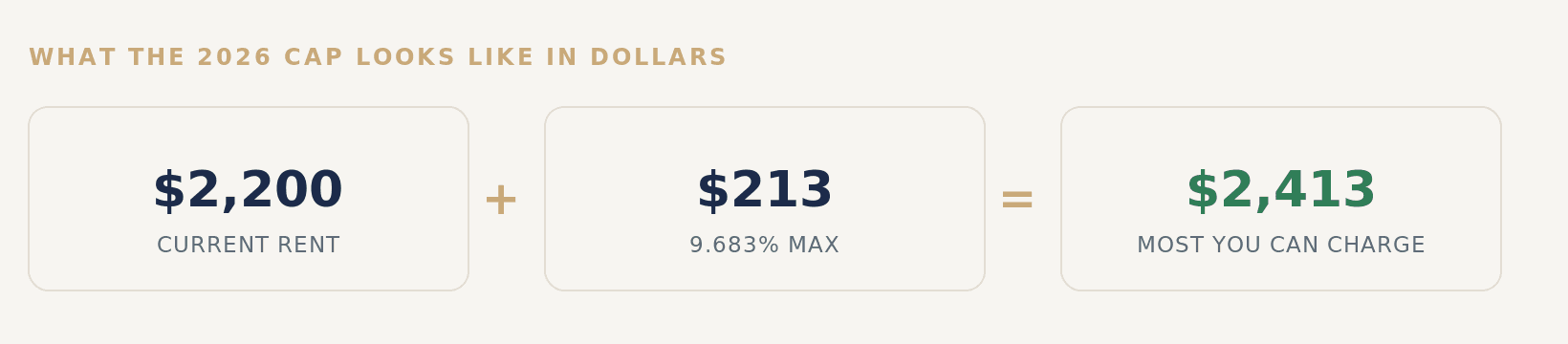
What this means in dollars: on a unit renting for $2,200 a month, the most you can add in a 12-month period during 2026 is about $213, bringing it to roughly $2,413. Not the formula in the abstract. That specific cap, tied to that specific year.
First-year increases are still off the table
One point we still correct often. During the first 12 months of a tenancy, you cannot raise the rent at all, regardless of the cap. The 9.683% figure only applies after a tenant has been in place for a full year. If you signed a fixed-term lease in 2025, the rent you agreed to is the rent for that first year, full stop.
Notice requirements are where people get caught
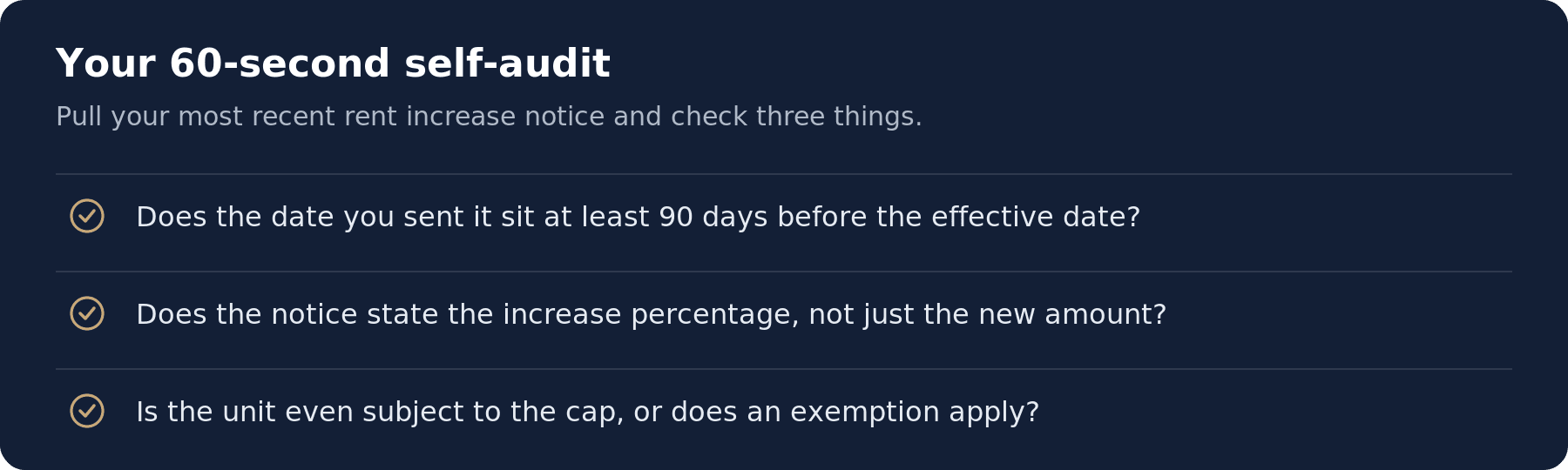
The compliance failures we see are rarely about the percentage. They are about notice. Any increase in rent or a recurring fee now requires at least 90 days' written notice before it takes effect. The old 60-day rent increase notice that many Washington landlords used for years no longer satisfies the statute for a standard increase. For a month-to-month tenancy, that 90-day clock is not optional, and an unlawful increase delivered on short notice can unravel an otherwise valid rent adjustment.
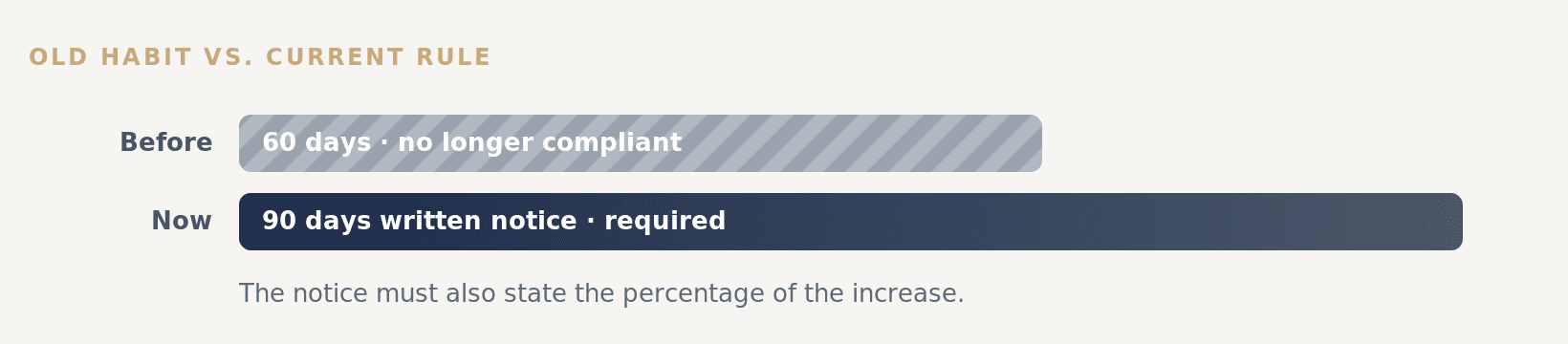
Your written notice must also state the percentage of the increase. A vague letter announcing a new rent amount without the supporting figure is a problem waiting to happen.
The exemptions matter, and most owners underuse them
HB 1217 is not a blanket rule covering every rental in the state. Several categories sit outside the rent cap:
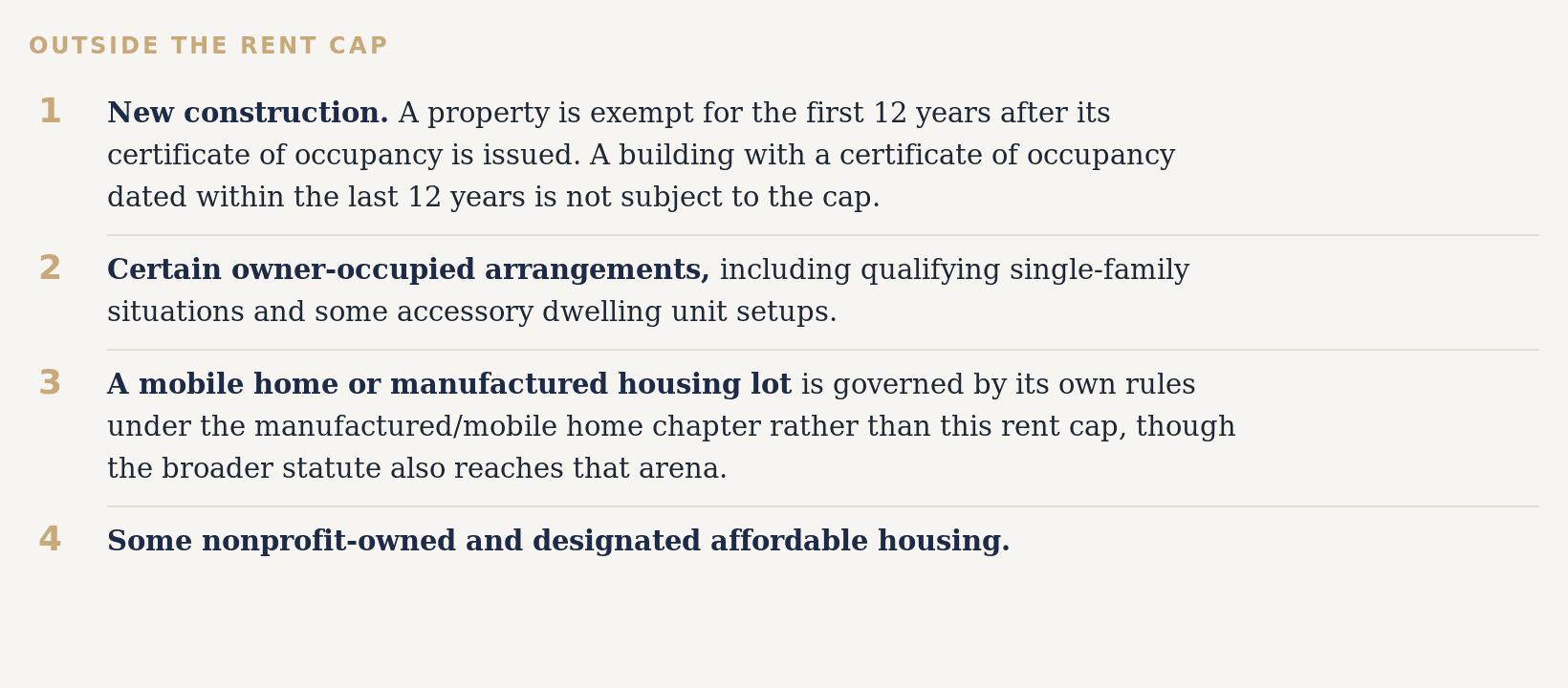
If you own a newer building or rent part of a home you live in, you may have more room than you assumed. The mistake we see is owners self-applying the cap to a dwelling unit that the statute never covered.
Enforcement now has teeth
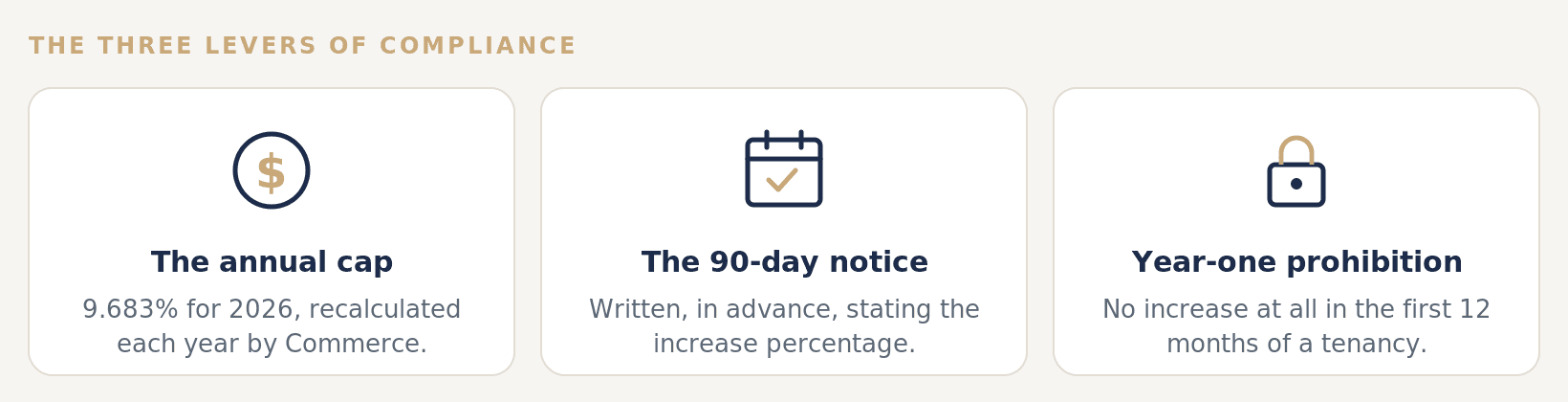
The Attorney General's Office has investigative and penalty authority under the statute, and a tenant can report a suspected violation directly. That changes the math on shortcuts. A defective notice or an unlawful increase is no longer just a private dispute between you and a tenant. It can become a state matter. The good news is that compliance is straightforward once you know the three levers: the annual cap, the 90-day notice, and the first-year prohibition. Get those right, and you are on solid ground.
What this means for owners across the region
We are based in Tacoma and serve Pierce County, and we work with housing providers throughout the Puget Sound region. Owners in Eastside King County, including Bellevue, Kirkland, Sammamish, Issaquah, and Newcastle, are dealing with higher rents, where the 9.683% cap translates into real dollars, making a clean notice process even more important. We also work with landlords in Snohomish County and Kitsap County who are managing the same rules across very different rental markets. The statute is statewide, but the practical pressure points look different in Bellevue than they do in Bremerton.
Beyond rent increases, HB 1217 has owners rethinking the documents that govern a tenancy from day one. A well-drafted rental agreement, a clean lease, and a compliant eviction notice are now your first line of defense. We handle that transactional side too: leases, eviction notices, deeds, easements, seller financing, land use and permitting, condominiumization, and general business counsel for property owners.
One year in, the takeaway
HB 1217 turned out to be more manageable than the early alarm suggested, but only for owners who treat compliance as a system rather than a guess. The 2026 cap is a known number. The notice rule is a hard deadline. The exemptions are real and worth confirming. If you are not certain which side of those lines your property falls on, that uncertainty is the actual risk.
Sources: Commerce announces 9.683% rent cap for 2026 · HB 1217 Landlord Resource Center · RHAWA: 2026 rent cap
Disclaimer: This article is for informational purposes only and does not constitute legal advice or create an attorney-client relationship. For guidance on a specific dwelling unit or tenancy in Washington State, consult a licensed Washington attorney.
Have a question about your property?
Whether it's a notice, a lease, an eviction, or a deal under review, tell us what's going on and a Washington landlord-tenant attorney at ROI Law Firm will get back to you.
Book a consultation →
Tacoma, WA
(253) 753-1530
1302 North I Street, Suite C, Tacoma, WA 98403
© 2025 ROI LAW FIRM. All rights reserved.