
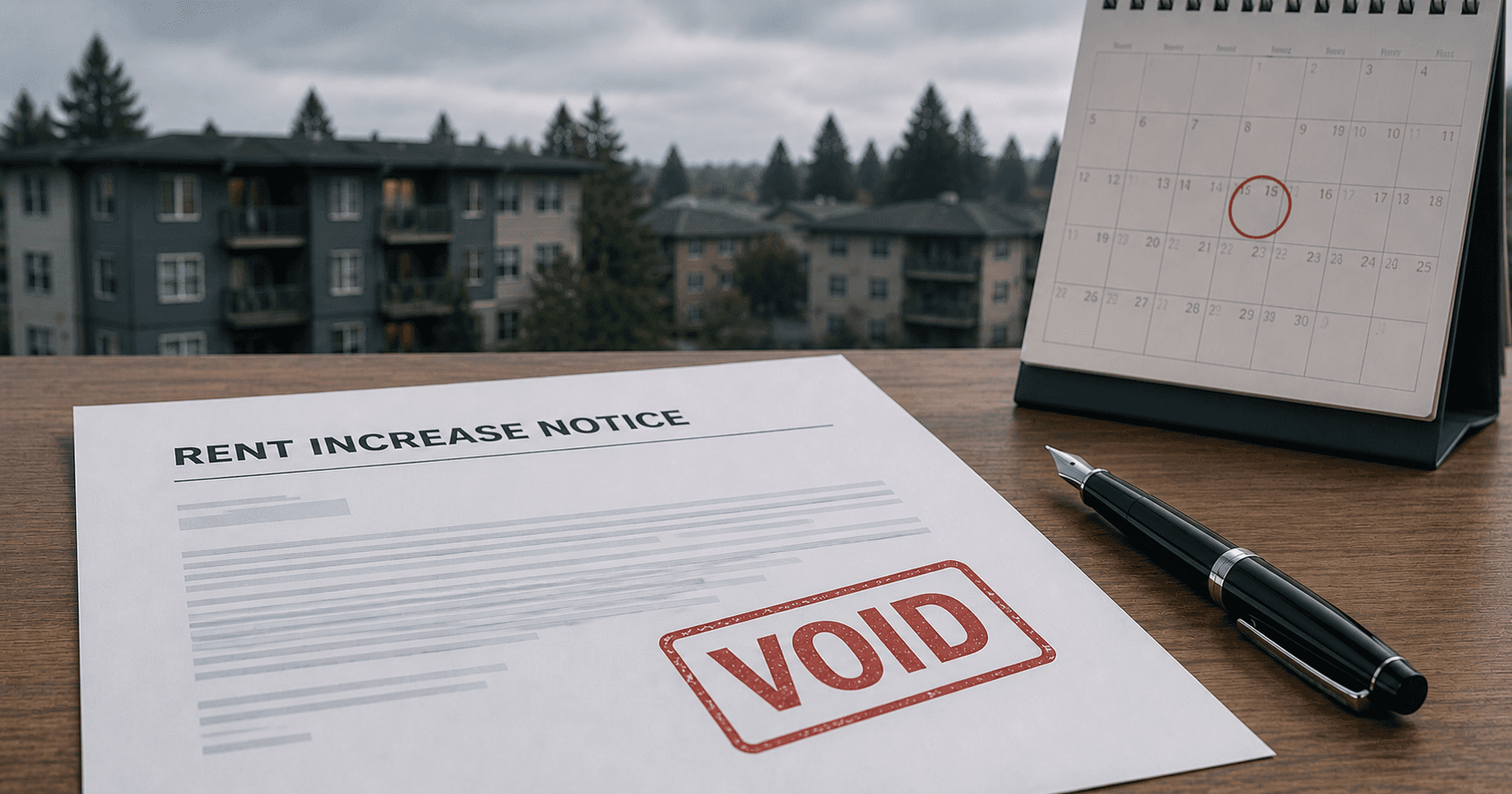
HB 1217 Notice Defects: Why Your Last Rent Increase Could Be Reset to Day Zero
Last Updated:
6 minutes
By:
ROI Law Firm
The five notice defects we see most often, the penalties hiding behind them, and how to check your own notice before a tenant does.
Most landlords we talk to understand the headline of HB 1217. The law limits rent increases, requires 90 days of notice, and caps how much you can raise rent in any 12-month period. What surprises people is how a small paperwork error can undo an increase entirely. A defective notice does not just get corrected. It can reset your timeline to day zero and, in the wrong circumstances, expose you to penalties that dwarf the rent you were trying to collect.
As a firm that handles unlawful detainer and transactional work for Washington housing providers, we have now reviewed enough of these notices to see the patterns. Here are the notice defects we see most often, and what they cost.
A defective notice is not a minor fix
Start with the stakes, because they change how carefully you should treat the paperwork. Under HB 1217, an unlawful rent increase can entitle a tenant to recover the excess rent fees they paid, their reasonable attorney's fees, statutory damages of up to three months' rent, and civil penalties of up to $7,500 per violation. The Attorney General's Office also has the authority to enforce the statute directly, and it has already pursued landlords who imposed unlawful increases.
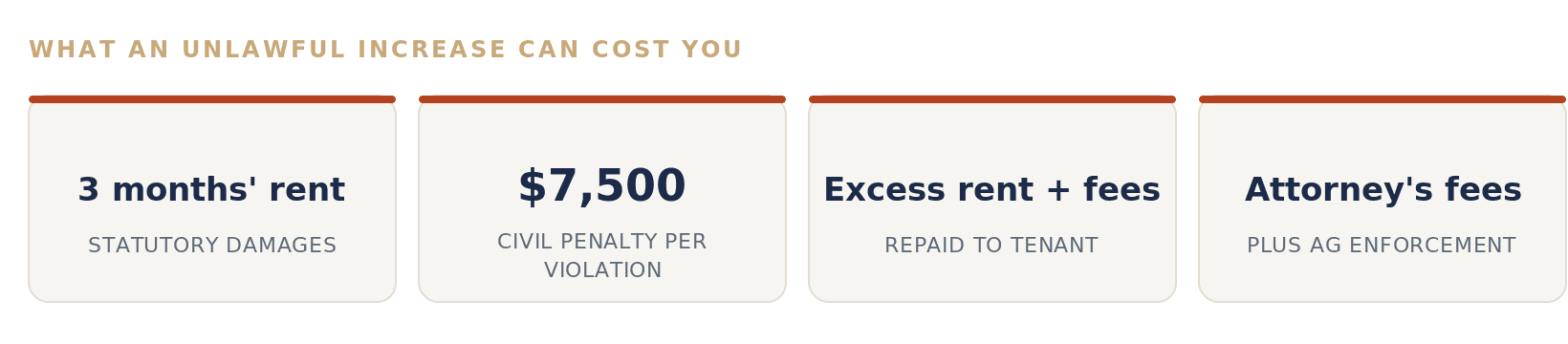
That is the exposure sitting behind a notice that is short by a few days or missing a required line. The increase you were trying to add is small. The downside is not.
The five defects we see most often
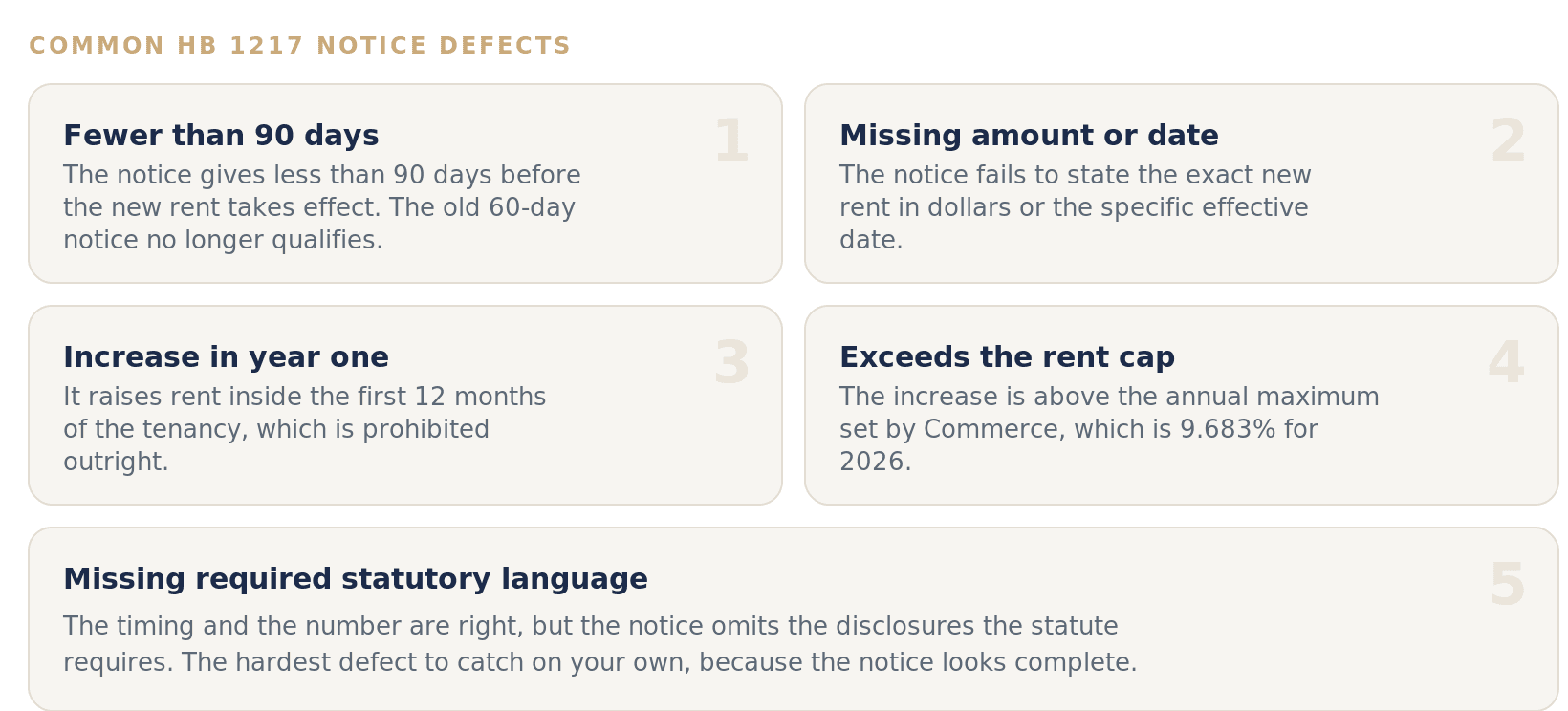
Defect one: fewer than 90 days
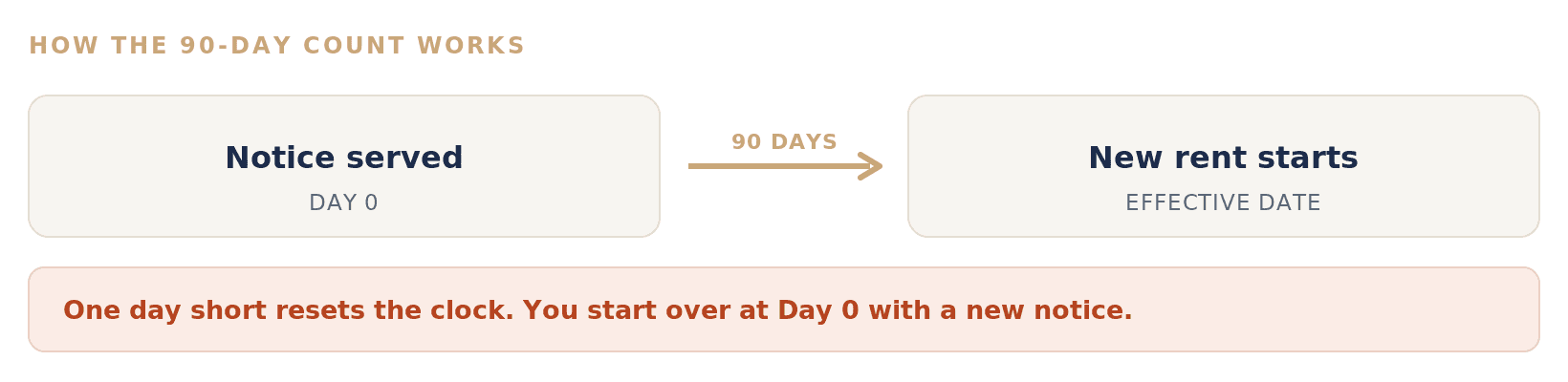
This is the most common problem we see, and it usually comes from habit. For years, many Washington landlords sent a 60-day rent increase notice. That timeline no longer satisfies the statute. Any rent increase now requires at least 90 days' written notice before the new amount takes effect. On a month-to-month tenancy, that clock is firm.
The trap is the counting. The 90 days run to the effective date, not to the start of the billing cycle you have in mind. If you mail the notice, build in the extra days for service. A notice that lands even one day short is defective, and the increase does not take effect on the date you wrote down. You are back to day zero, sending a fresh notice with a new 90-day runway.
Defect two: missing the new amount or the effective date
A valid notice of the rent increase must state two specific things: the exact new rent amount and the date it takes effect. We see notices that announce a percentage but never state the dollar figure, and notices that say rent is "going up" without naming the day. Both are defective. The tenant cannot be left to calculate the number or guess the date. State the new monthly rent in dollars and state the effective date plainly.
We also recommend stating the percentage of the increase alongside the dollar amount. It shows your math, and it helps demonstrate that you stayed under the cap.
Defect three: raising rent in the first 12 months
HB 1217 prohibits any rent increase during the first 12 months of a tenancy, full stop. The cap percentage does not yet apply because no increase is allowed in that first year. We see this most often when an owner inherits a tenancy through a purchase and assumes the clock restarts at closing. It does not. The tenancy's first 12 months run from when the tenant's occupancy began, not from when you took title.
Defect four: exceeding the rent cap
Even a perfectly timed notice is defective if the number is too high. After the first year, the increase in any 12-month period cannot exceed the annual maximum set by the Department of Commerce. For 2026, that maximum is 9.683%. Commerce publishes the figure each year and maintains an HB 1217 Landlord Resource Center, where you can confirm the current number before you send anything. Do not rely on last year's percentage.
Defect five: missing required statutory language
The notice must also include the disclosures the statute requires. A notice that gets the timing and the number right can still be challenged if it omits the legally required language. This is the defect owners are least likely to catch on their own, because the notice looks complete. It reads fine, the math is right, and it is still vulnerable. This is the piece worth having reviewed.
Where the exemptions actually help
Before you worry about any of this, confirm whether the cap even applies. Several categories sit outside it.
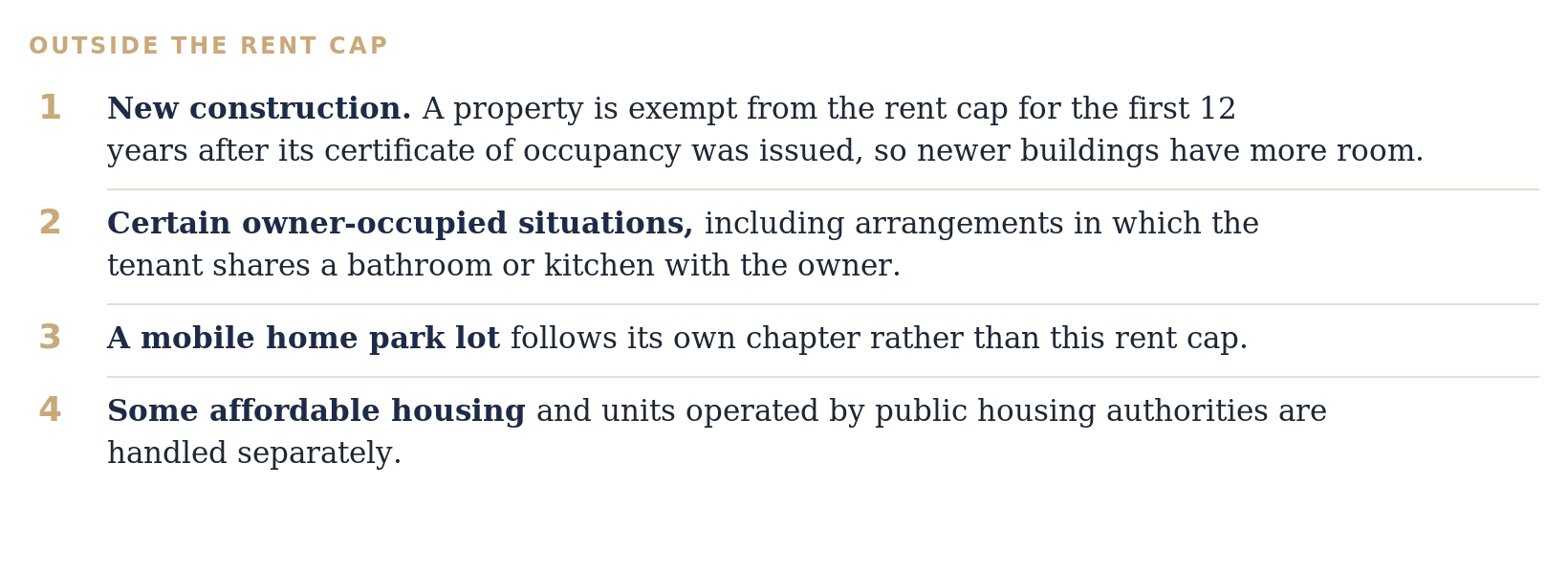
The 90-day notice and the first-year prohibition can still reach you even where the cap does not, so confirm which rules apply to your specific unit rather than assuming.
What this means for owners across Washington
We are based in Tacoma and serve Pierce County, and we work with housing providers across the state. Owners in Eastside King County, including Bellevue, Kirkland, Sammamish, Issaquah, and Newcastle, are charging higher rents where a reset increase costs real money. We also work with landlords in Snohomish and Kitsap Counties, applying the same rules. HB 1217 is statewide, so the notice requirement does not vary by county.
Beyond rent increases, the documents that open a tenancy are now your first line of defense. We handle that side too: leases, rental agreements, eviction notices, deeds, easements, seller financing, land use and permitting, condominiumization, and general business counsel for property owners.
Before your next increase goes out
Pull the last notice you sent and check it against five things.
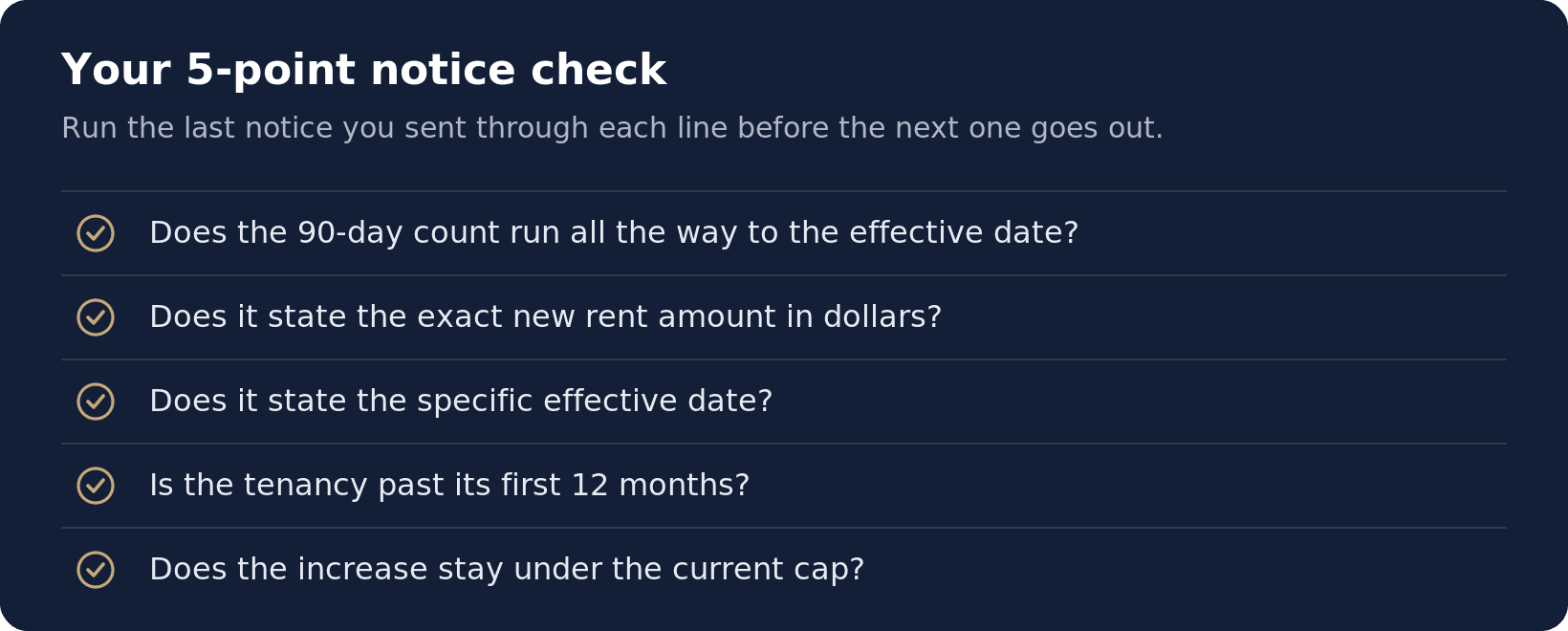
If any of those are uncertain, fix them before the notice goes out rather than after a tenant challenges it. A clean notice is far cheaper than a reset plus penalties.
Sources: Stoel Rives: WA statewide rent control · Commerce HB 1217 Landlord Resource Center · HB 1217 bill text
Disclaimer: This article is for informational purposes only and does not constitute legal advice or create an attorney-client relationship. For guidance on a specific dwelling unit or tenancy in Washington State, consult a licensed Washington attorney.
Have a question about your property?
Whether it's a notice, a lease, an eviction, or a deal under review, tell us what's going on and a Washington landlord-tenant attorney at ROI Law Firm will get back to you.
Book a consultation →
Tacoma, WA
(253) 753-1530
1302 North I Street, Suite C, Tacoma, WA 98403
© 2025 ROI LAW FIRM. All rights reserved.