
How Long Does the Eviction Process Take in Washington State? A Stage-by-Stage Timeline
Last Updated:
4 Minutes
By:
ROI Law Firm
If you have ever been told you can have a tenant "out by the weekend," set that idea aside. How long does the eviction process take in Washington state depends on the stage you are in, and the law builds in waiting periods at almost every step. For a clean case where the tenant defaults, the realistic range is about three to twelve weeks. A contested case can run three to six months. Here is the timeline, stage by stage, the way it actually plays out in Pierce County and across the rest of the state.
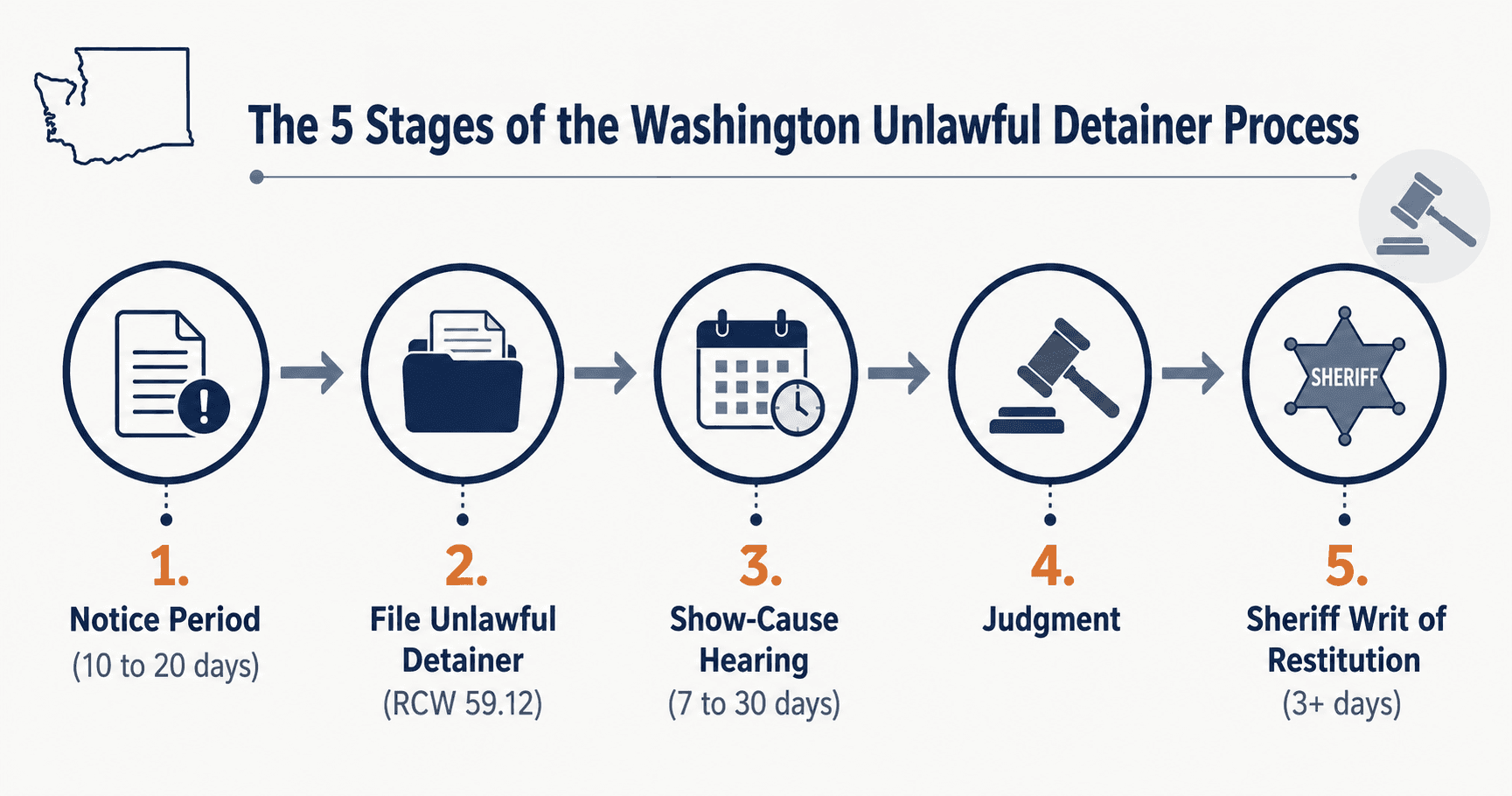
Stage 1: The Notice Period
Nothing legal starts until you serve a proper written notice, and the clock length depends on the reason. Nonpayment of rent calls for a 14-day pay-or-vacate notice. A lease violation calls for a 10-day notice to comply or vacate. Ending a month-to-month tenancy for a permitted reason generally calls for a 20-day notice to vacate. These notice requirements are strict. A wrong date, a missing amount, or bad service is the single most common reason a case gets thrown out and restarted, which adds weeks.
Note that rent increases sit under a separate rule now. House Bill 1217 (HB 1217) created statewide rent increase limitations. Annual rent increases are capped at 7 percent plus the consumer price index, or 10 percent, whichever is less, in any 12-month period. The notice of rent and fee increases limits also changed: increase notices now require 90 days, up from 60. The applicable consumer price index is the index for all urban consumers for the Seattle-Tacoma-Bellevue area, and the Department of Commerce publishes the rent cap figure each year through its HB 1217 Landlord Resource Center. The Attorney General enforces these rules. A botched rent increase will not give you grounds to evict, so confirm the math before you act.
Stage 2: Filing the Unlawful Detainer (RCW 59.12)
When the notice period ends and the tenant has not paid, fixed the issue, or moved, you file an unlawful detainer action in Superior Court under RCW 59.12. The tenant is served a summons and complaint and has 7 to 30 days to file a written answer, depending on how service was completed.
Stage 3: The Show-Cause Hearing
The court sets a show-cause hearing not less than 7 nor more than 30 days after service. If the tenant never answers, you can seek a default judgment in a matter of days. If the tenant answers and contests, the court hears both sides at the show-cause hearing and either rules or sets the matter for trial. This is where court calendars drive the timeline more than anything you do.
Stage 4: Judgment
Win at show cause or default, and the court enters judgment for possession. In a nonpayment case, the tenant still has a 5-day window after judgment to pay the full amount plus costs and keep the unit. Plan for that pause.
Stage 5: The Writ of Restitution
The judgment does not let you change the locks yourself. The court issues a writ of restitution, and only the sheriff enforces it. The sheriff serves the writ and cannot execute it for at least 3 days. In busier counties, scheduling the physical removal with the sheriff can add days or weeks on top of that.
What a Stalled Month Actually Costs
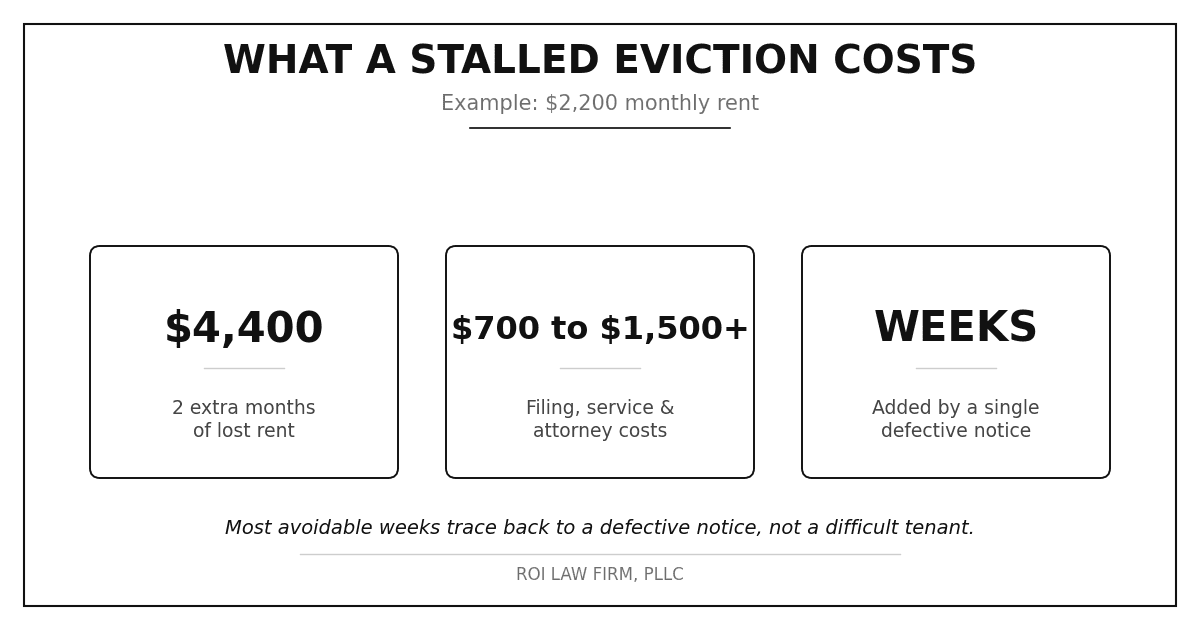
Numbers make the delay real. Say the rent is $2,200 a month. A case that drags two extra months past your expectation is $4,400 in lost rent you will likely never collect, before you add filing fees, service costs, and attorney time that commonly run $700 to $1,500 or more. Every avoidable week has a dollar figure attached, and most of those weeks trace back to a defective notice, not a difficult tenant.
Run a Quick Self-Audit on Your Notice
Before you count on any timeline, pull out your current notice and check it. Is it the right type for this reason? Is the cure period correct? Is the dollar amount exact? Was it served properly? If you are unsure on any of these, fixing it now is far cheaper than restarting later.
We handle unlawful detainer and ejectment matters along with the transactional work that supports property owners: eviction notices, leases, deeds, easements, seller financing documents, feasibility and permitting, land use, condominiumization, and business counsel. We are based in Tacoma and serve clients throughout Pierce County, Snohomish County, Kitsap County, and Eastside King County, including Bellevue, Newcastle, Issaquah, Sammamish, and Kirkland.
If you want a second set of eyes on a notice before you file, send it over for a review.

Disclaimer: This article is for informational purposes only and does not constitute legal advice or create an attorney-client relationship. For guidance on a specific dwelling unit or tenancy in Washington State, consult a licensed Washington attorney.
Have a question about your property?
Whether it's a notice, a lease, an eviction, or a deal under review, tell us what's going on and a Washington landlord-tenant attorney at ROI Law Firm will get back to you.
Book a consultation →
Tacoma, WA
(253) 753-1530
1302 North I Street, Suite C, Tacoma, WA 98403
© 2025 ROI LAW FIRM. All rights reserved.