
Is a 3 Day Eviction Notice Legal in Washington State?
Last Updated:
4 Minutes
By:
ROI Law Firm
Short answer: yes. Is a 3 day eviction notice legal in Washington state? It is, but only in a narrow set of situations, and using it for the wrong reason is one of the fastest ways to lose an eviction case. A lot of landlords still believe the old rule that unpaid rent gets a 3-day notice. That changed years ago. Today the 3-day notice survives only for serious misconduct, while rent follows a different, longer track. This piece clears up the confusion so you serve the right notice the first time.
The 3-Day Notice Is Real, but It Is Narrow
Washington still allows a 3-day notice, but it is reserved for the most serious conduct in a rental unit. Under RCW 59.18.650, a 3-day notice to quit applies to three categories: illegal activity on the premises, waste (meaning significant property damage), and nuisance behavior that substantially interferes with the safety or enjoyment of neighbors or the landlord.
The defining feature of these grounds is that they are not curable. The tenant is not given a chance to fix the problem and stay. The notice tells them to leave, because the conduct itself is the reason. That is exactly why the 3-day notice is the most scrutinized notice in any eviction proceedings. A judge will look hard at whether the facts truly amount to nuisance, waste, or illegal activity. If they do not, the notice fails.
What Changed: Rent Is Now a 14-Day Notice
Here is the myth worth busting. Before the 2019 reforms to the landlord tenant law, nonpayment of rent could move quickly on a short notice. That is no longer the case. For unpaid rent, Washington state now requires a 14-day notice to pay or vacate, not a 3-day notice.
The 14 day notice gives the tenant 14 days to pay the full amount owed or move out. One detail matters a great deal: the amount on a notice to pay or vacate must reflect rent only. You cannot roll late fees, utilities, or other penalties into the payment of rent figure on that notice. Doing so can void the notice and sink the whole case. If you are serving a notice over monthly rent, it is a 14-day notice, full stop.
Which Notice Fits Which Situation
Think of it as three separate tracks under the rental agreement:
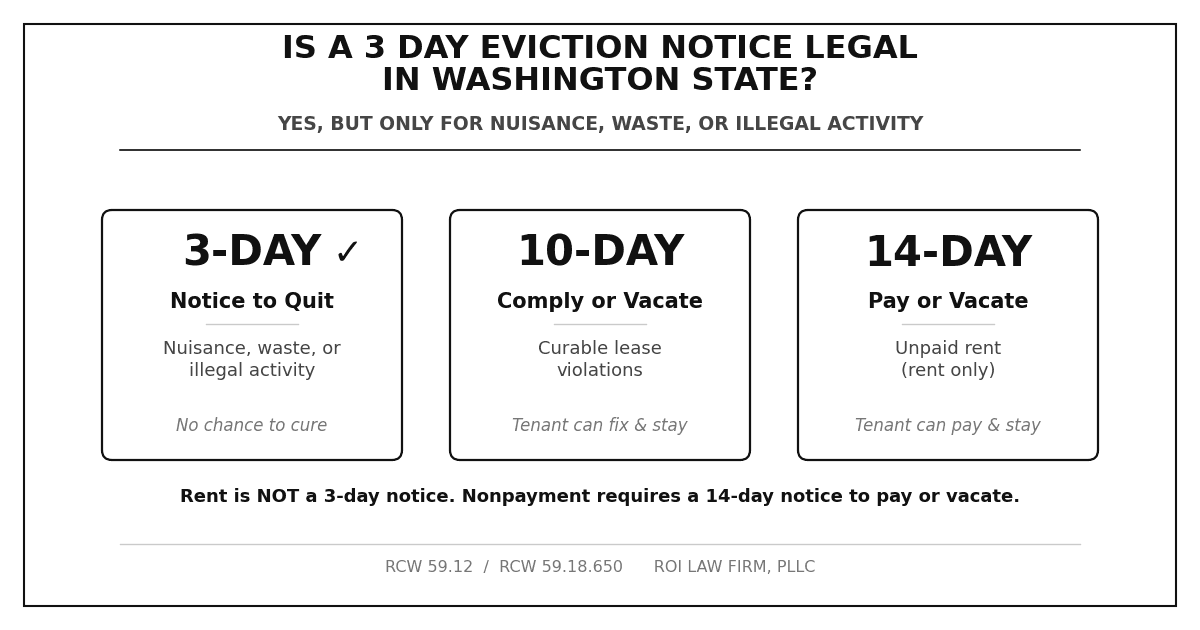
A 14-day notice to pay or vacate is for nonpayment of rent. The tenant can pay and stay.
A 10-day notice to comply or vacate is for curable lease violations, such as an unauthorized pet or occupant. The tenant can fix the problem and stay.
A 3-day notice is for nuisance, waste, or illegal activity. There is no chance to cure.
Matching the notice to the situation is the whole game. The most common reason landlords lose is a mismatch: serving a 3-day notice for something that was really a curable violation, or trying to use a 3-day notice for rent. When the notice does not fit the ground, the court treats it as defective, and a defective notice usually means the case is dismissed and you start over.
Why the Wrong Notice Costs You
A notice is the legal foundation of an unlawful detainer action. If you pick the wrong type, the foundation fails no matter how clear the underlying problem is. Say a tenant is behind on rent and you serve a 3-day notice because you heard that is the rule. At the hearing, the tenant points out that rent requires 14 days. The judge finds a failure to comply with the statute, dismisses the case, and you have to serve a correct 14-day notice and refile. That is weeks of lost time and another round of costs, all because the notice did not match the ground.
Service Still Has to Be Correct
Choosing the right notice is only half the job. Washington requires proper service. The preferred method is handing the notice directly to the tenant. If that is not possible after a real attempt, you may leave it with a person of suitable age who resides there and mail a copy, or in some cases post it in a conspicuous place and mail a copy. The day of service is generally not counted. Sloppy service can defeat an otherwise valid notice, so document every attempt.
Tenants Have Resources, Too
It helps to know the other side of the table. Tenants facing eviction in Washington may qualify for rental assistance and for legal representation, including help through the Northwest Justice Project and related legal aid programs. None of this is legal advice for your specific situation, but it explains why these cases are often contested and why getting your notice right from the start matters so much.
Talk to a Tacoma Eviction Attorney
We are based in Tacoma and handle unlawful detainer and ejectment matters across Pierce County, plus Snohomish County, Kitsap County, and Eastside King County, including Bellevue, Newcastle, Issaquah, Sammamish, and Kirkland. We also handle eviction notices, leases, deeds, easements, seller financing documents, feasibility and permitting, land use, condominiumization, and business counsel.
Run a Quick Self-Audit on Your Notice
Before you serve anything, check the fit. Is this a rent problem (14-day), a curable lease violation (10-day), or genuine nuisance, waste, or illegal activity (3-day)? Does your notice name the right ground and the right number of days? Is the dollar amount, if any, limited to rent? Do you have a plan to serve it properly and document it? If you are unsure on any point, fixing it now is far cheaper than a dismissed case later. Send your notice over for a review before you serve it.
Disclaimer: This article is for informational purposes only and does not constitute legal advice or create an attorney-client relationship. For guidance on a specific dwelling unit or tenancy in Washington State, consult a licensed Washington attorney.
Have a question about your property?
Whether it's a notice, a lease, an eviction, or a deal under review, tell us what's going on and a Washington landlord-tenant attorney at ROI Law Firm will get back to you.
Book a consultation →
Tacoma, WA
(253) 753-1530
1302 North I Street, Suite C, Tacoma, WA 98403
© 2025 ROI LAW FIRM. All rights reserved.