

What Are the Eviction Laws in Washington State? A Property Owner's Guide
Last Updated:
8 Minutes
By:
ROI Law Firm
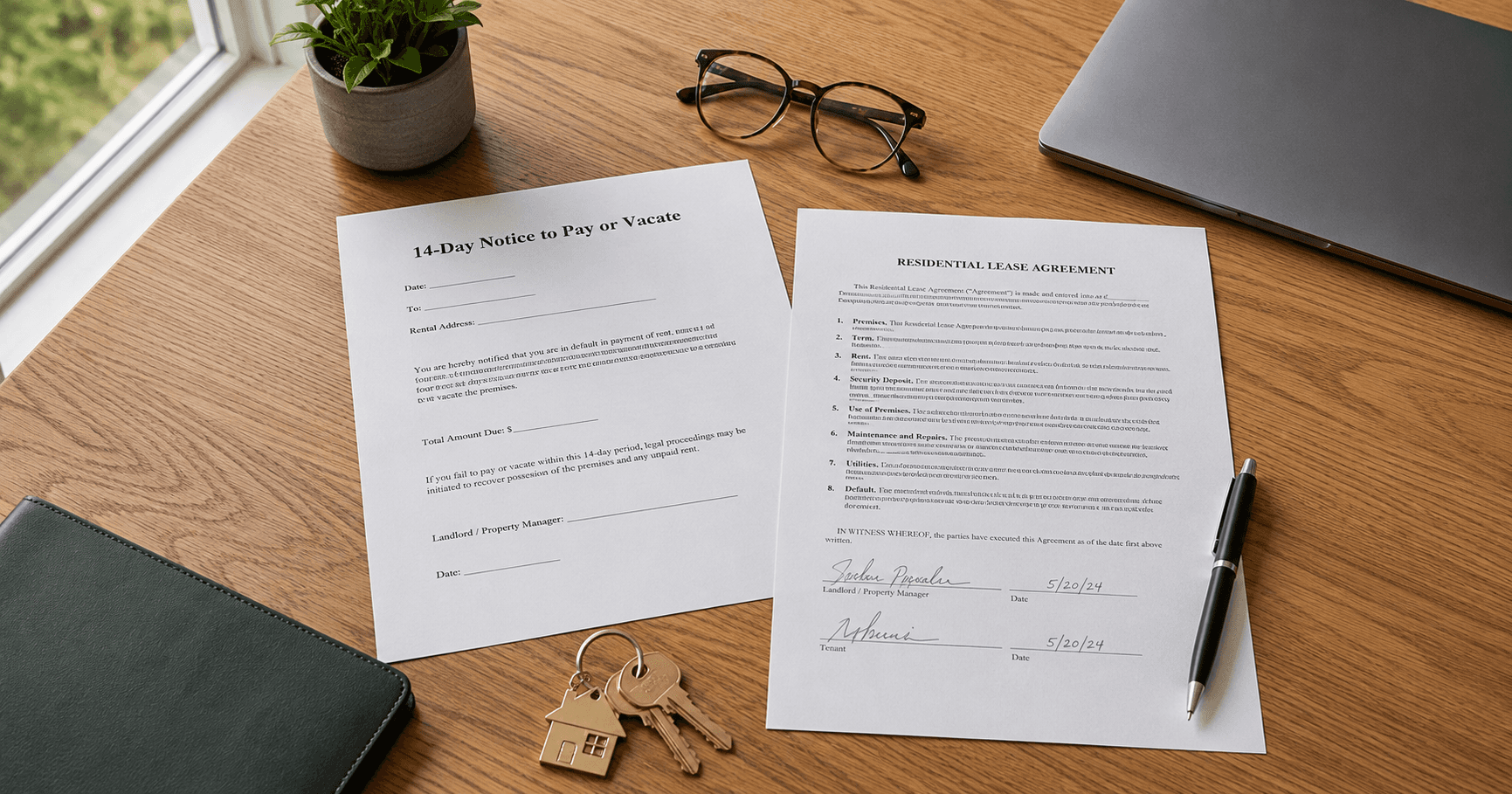
What are the eviction laws in Washington state, and why do so many capable owners lose cases they should have won? Usually it comes down to one of two things: serving the wrong notice, or skipping the court process and trying to handle the problem themselves. Washington gives landlords a clear path to recover a rental unit, but it is a narrow path, and the state expects you to follow it exactly.
This guide is the hub. It walks through the legal framework that governs every residential tenancy in the state, the notices that start the clock, and the court process that ends it. Think of it as the map. The detailed posts we link from here are the close-ups. If you own or manage rental property in Pierce County, Snohomish County, Kitsap County, or the Eastside, this is the foundation worth reading first.
The Two Statutes That Run the Show
Two state laws do most of the work. The Residential Landlord-Tenant Act, found at RCW 59.18, sets the rights and duties between landlord and tenant: deposits, repairs, entry, and the reasons a tenancy can end. The unlawful detainer statute, RCW 59.12, sets the court procedure for actually removing a tenant who will not leave.
The word "eviction" is the everyday term. The legal term is unlawful detainer, and the lawsuit is an unlawful detainer action. We mention this because the statutes, the forms, and the court file all use that language. When you read "unlawful detainer," read "eviction."
The single most important thing to understand about Washington's state laws is that you cannot evict a tenant yourself. Changing the locks, shutting off utilities, removing the front door, or hauling belongings to the curb are all illegal, even when the tenant is months behind on payment of rent. These are called self-help evictions, and they expose you to damages, the tenant's attorneys fees, and a tenant who gets to stay. Only a sheriff, acting on a court order, can physically remove someone. Every legitimate eviction process in Washington state runs through a courtroom.
Just Cause: You Need a Legal Reason
Since 2021, RCW 59.18.650 requires "just cause" to end most residential tenancies, including month-to-month arrangements. You can no longer end a tenancy simply because you would prefer a different tenant. You need a reason the statute recognizes, and most reasons require a specific written notice.
The common just causes fall into a few buckets. There is nonpayment of rent. There are lease violations, meaning the tenant broke a term of the lease agreement. There is criminal or nuisance activity. And there are owner-based reasons, such as deciding to sell the property, move in a family member, or take the unit off the market for major renovation. Each bucket carries its own notice period, and matching the reason to the correct notice is the step in the eviction process that owners get wrong most often.
The Notices That Start the Clock
Before you can file an eviction lawsuit, you have to serve the right written notice and let the notice period run. Here are the ones that matter most.
A 14-Day Notice to Pay or Vacate is your tool for nonpayment. It has to state the exact amount of rent owed and where to pay it. If the tenant pays in full inside those 14 days, the matter is over and you cannot proceed. Padding the notice with late fees or other charges as if they were rent is a frequent and costly error.
A 10-Day Notice to Comply or Vacate covers a fixable lease violation, such as an unauthorized pet or an unapproved occupant. The tenant gets 10 days to correct the problem or move out.
A 3-Day Notice to Quit applies to conduct the law treats as unfixable: waste, nuisance, certain illegal activity on the property. Because there is nothing to cure, the notice requiring the tenant to leave gives no second chance, and you can move toward court when it expires.
A 20-Day Notice generally applies when a tenant ends a month-to-month tenancy. When the landlord is the one ending it, the just cause rules usually require a longer notice tied to the specific reason.
Longer notices apply to owner-based just causes. Selling the property, moving in yourself or a family member, or substantially rehabbing the unit typically requires 90 days, and some grounds require 120 days. These timelines change, and they are the area where local rules in cities on the Eastside can add requirements on top of the state floor, so confirm the current period before you serve.
How the Unlawful Detainer Process Works
When the notice period expires and the tenant has not paid, cured, or moved, you can file an eviction lawsuit. In Washington, residential unlawful detainer actions are filed in superior court, not district court.
The case opens with a Summons and Complaint, which is served on the tenant and lays out what you are asking the court to do. The tenant has a defined window to file a written response. Miss the deadline as a tenant, and the landlord can ask for a default. File a response, and the case moves to a hearing.
At the show cause hearing, both sides appear and a judge decides whether the case can move forward or whether there is a genuine dispute that needs a full trial. If the landlord prevails, the court issues a Writ of Restitution. That writ is the only document that authorizes removal, and it is directed to the sheriff, not to you.
Once the writ is served, the tenant typically has three to five days to leave: five days when the case is about unpaid rent, three days for other grounds. If they stay past that, the sheriff returns to carry out the order. You still do not touch the locks yourself. The sheriff does.
One more piece owners should know about: Washington has built mediation and rent-assistance steps into the front of the process in many counties through its eviction resolution programs. In a number of jurisdictions, an owner pursuing unpaid rent must go through that process before a court will hear the case. Skipping it can stall your filing.
How Long It Takes and What It Costs
Owners always ask two questions: how long, and how much. There is no fixed answer, because the tenant's choices drive the calendar. A clean, uncontested nonpayment case often runs four to six weeks from the day you serve the 14-day notice to the day the sheriff posts the writ. Add a contested response, a mediation step, or a continued hearing, and two to three months is realistic.
Cost works the same way. The superior court filing fee, the cost to have a process server deliver the Summons and Complaint, and the sheriff's fee to execute the writ are the baseline, and every week the unit sits occupied without payment of rent is lost income stacked on top. That is before legal fees. The point is not that eviction is expensive. It is that the expensive version is the one where a defective notice forces you to start over.
Right to Counsel Changes the Math
Washington was the first state to guarantee appointed counsel for low-income tenants in eviction cases. In practice, that means the tenant across the aisle is far more likely to have a lawyer than they were a few years ago, and that lawyer reads notices closely. A defective 14-day notice, a missed mediation step, or a self-help shortcut is exactly what opposing counsel looks for first. This is the real reason precision matters: the margin for procedural error has gotten thin.
A Few Myths Worth Retiring
"I can evict in a weekend." No. Even an uncontested case takes weeks from notice to writ, and a contested one can run longer.
"A no-cause notice still works for month-to-month." Generally not, under the just cause rules. You need a recognized reason.
"Once they stop paying, I can shut off the water to move things along." That is a self-help eviction and one of the fastest ways to turn a case you would win into a payout you owe.
"It is cheaper to handle it without a lawyer." Filing fees, service costs, and lost rent already add up to real money before you account for the risk. A single misstep that forces you to restart the eviction process can easily cost more than counsel would have. When you add the possibility of paying the tenant's attorneys fees on top of your own, the budget math usually favors getting it right the first time.
What This Means Where You Own Property
The Residential Landlord-Tenant Act is statewide, so the core framework is the same whether your rental unit sits in Tacoma or Marysville. Local ordinances are where the differences live.
In Pierce County and Tacoma, owners work within the state framework, and the county's eviction resolution program shapes how nonpayment cases begin. This is our home base, and most of our clients are here.
On the Eastside of King County, cities such as Bellevue, Kirkland, Issaquah, Sammamish, and Newcastle sit under the same state statutes but can layer on local notice and relocation rules. Bellevue owners in particular should not assume the state minimum is the whole story. Confirm the city layer before serving.
In Snohomish County, including Everett and the cities along the I-5 corridor, the state process governs, and the county's own resolution and assistance steps affect timing on unpaid-rent cases.
In Kitsap County, across the sound in Bremerton, Silverdale, and Poulsbo, owners follow the same RLTA and unlawful detainer rules, with county-level procedures worth confirming before you file.
A Quick Self-Audit Before You Serve
Run through these five questions before any notice leaves your hands. Do you have a just cause the statute actually recognizes? Are you using the correct notice for that reason, with the right number of days? Does a pay-or-vacate notice list only rent, with the exact amount and a real place to pay? Have you checked whether a county resolution or mediation step applies before you can file? And are you absolutely certain you have done nothing that could be read as self-help?
If you cannot answer all five cleanly, stop before you serve. A notice that fails on any one of them can reset your whole timeline.
Knowing what the eviction laws in Washington state require is the difference between a clean recovery of your property and a case that collapses on a technicality. If you own or manage rental property in Pierce, Snohomish, Kitsap, or the Eastside and want a second set of eyes on a notice, a lease, or a tenancy you need to end, ROI Law, PLLC handles unlawful detainer and the transactional work behind it, from leases and notices to deeds and land use. Reach out before you serve, not after.

Disclaimer: This article is for informational purposes only and does not constitute legal advice or create an attorney-client relationship. For guidance on a specific dwelling unit or tenancy in Washington State, consult a licensed Washington attorney.
Have a question about your property?
Whether it's a notice, a lease, an eviction, or a deal under review, tell us what's going on and a Washington landlord-tenant attorney at ROI Law Firm will get back to you.
Book a consultation →
Tacoma, WA
(253) 753-1530
1302 North I Street, Suite C, Tacoma, WA 98403
© 2025 ROI LAW FIRM. All rights reserved.